


.jpg?w=1440&dpr=2)
Best Deals
.jpg?w=340&dpr=2)
Family Tours
Tourism Board Alliances
Honeymoon
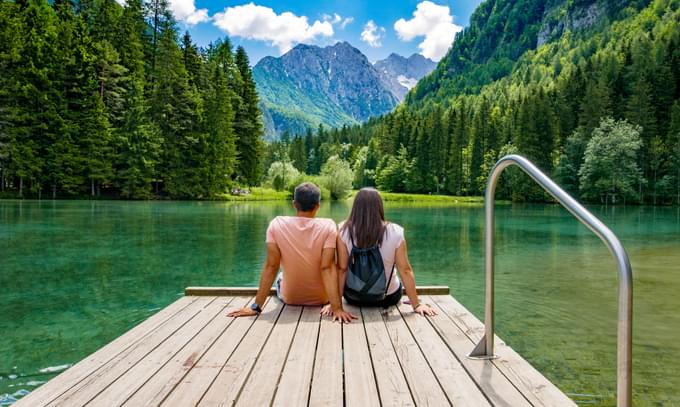
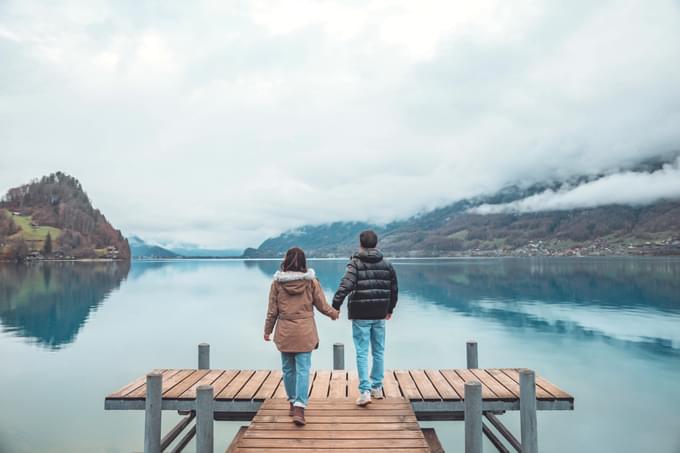
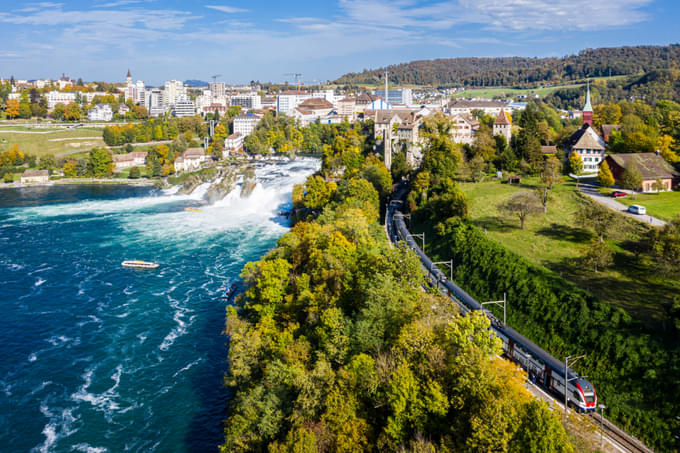
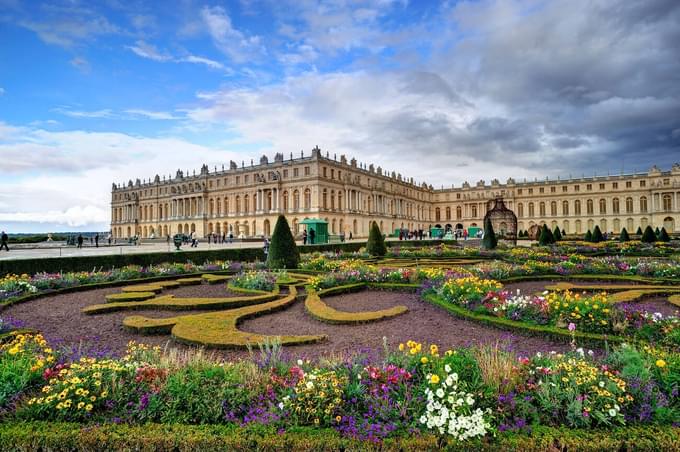
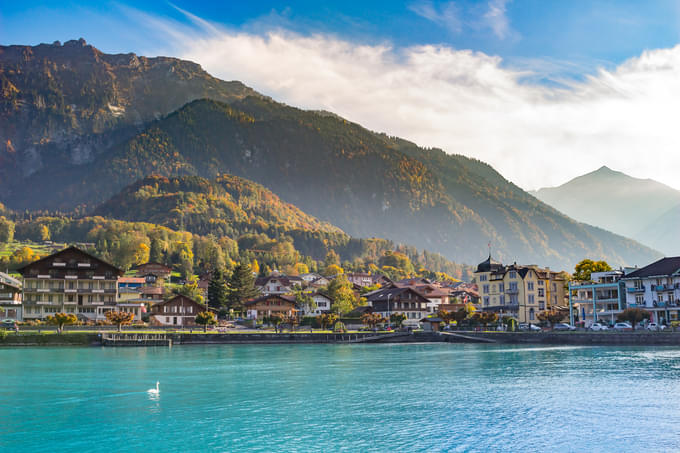
More Switzerland Packages
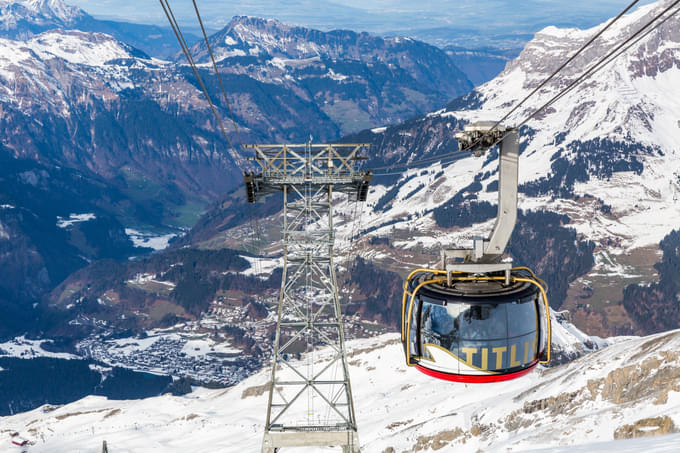
Best of Switzerland & Italy | Roman Streets to Snowy Alps
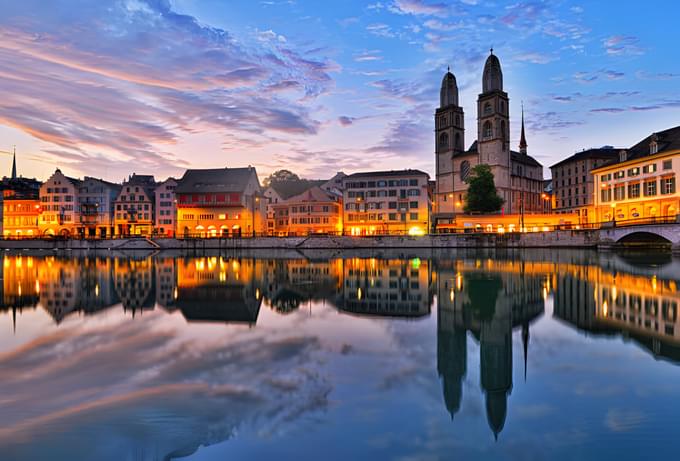
Glimpse Of Switzerland | FREE FIFA Museum Tickets
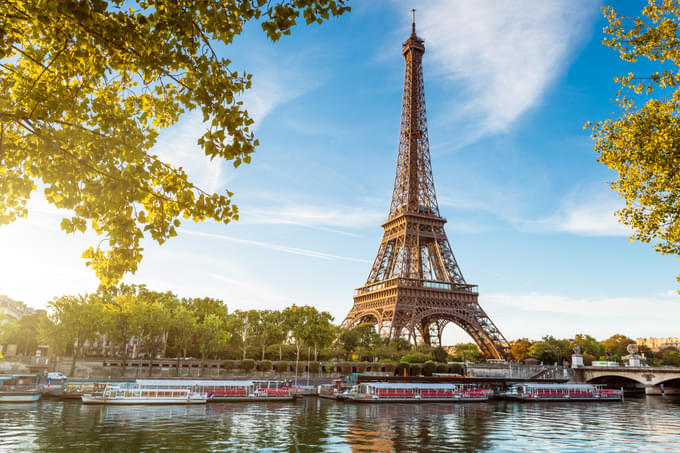
Amsterdam, Paris & Lucerne Tour with FREE Paris Pass
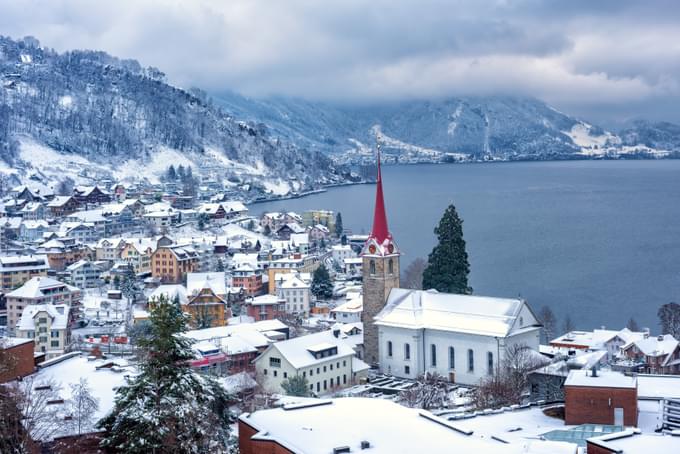
Europe Golden Trio | Switzerland, Amsterdam & Paris Tour
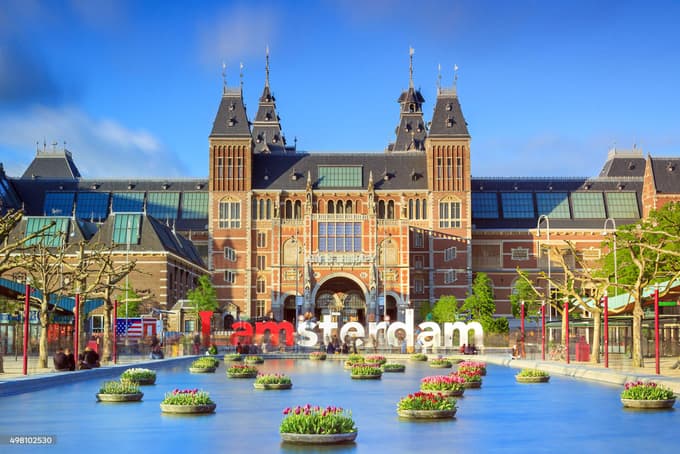
Classic Europe | From Roman Ruins to Amsterdam Canals
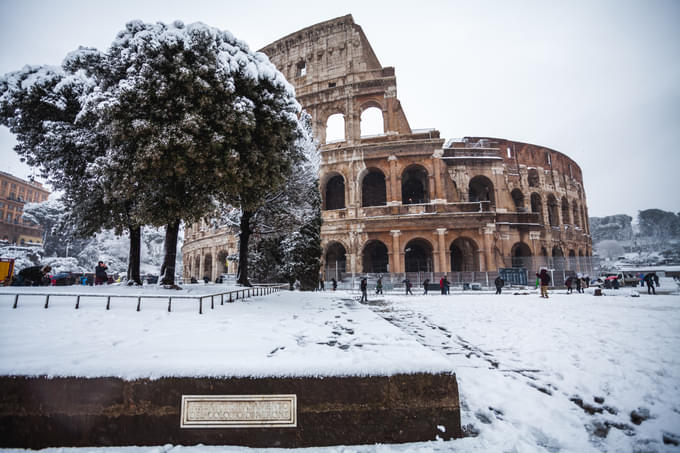
Western Europe In A Nutshell
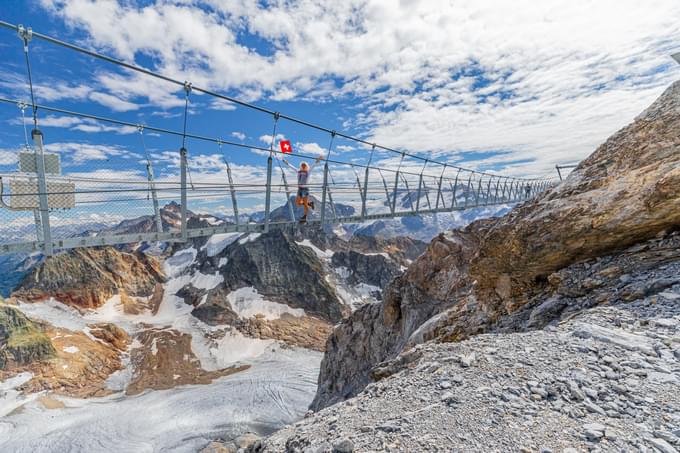
Classic Switzerland | Peaks, Lakes, and Alpine Trails
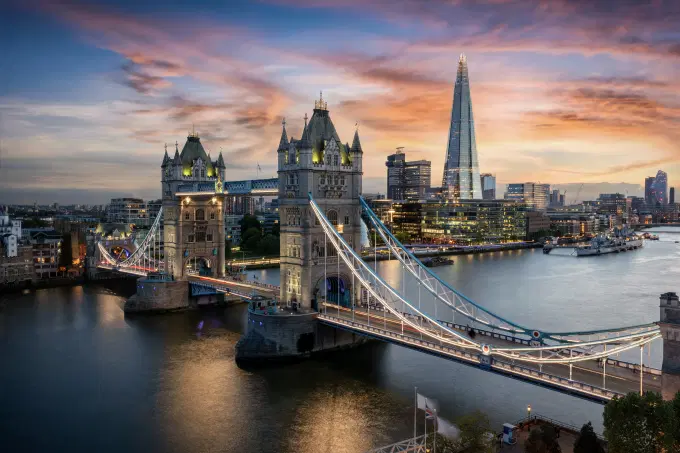
Grand Europe Group Tour Package
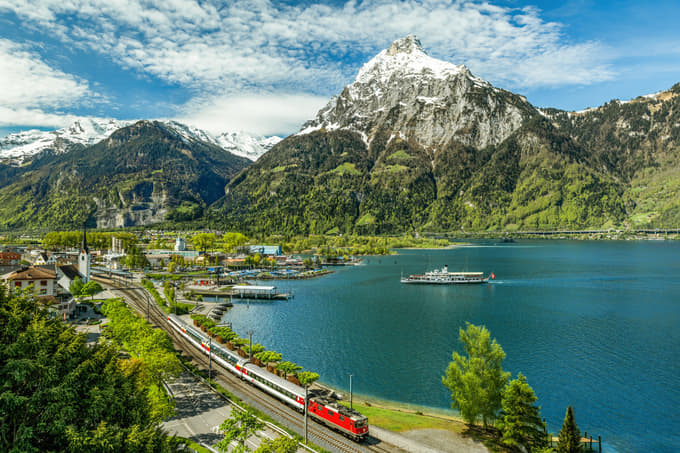
Switzerland Trails | First Class Swiss Pass Exclusive Limited Deal
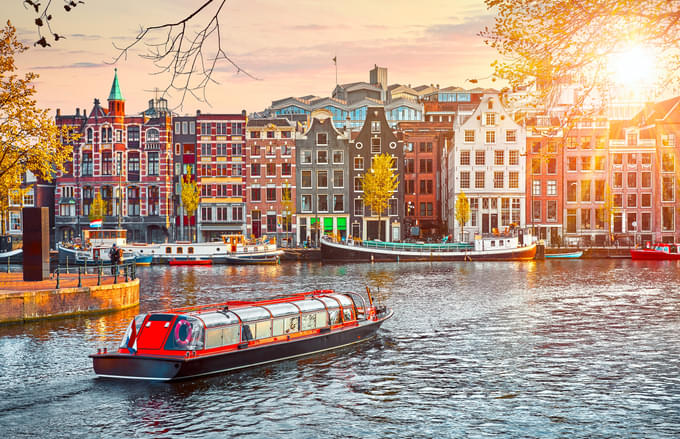
Grand European Journey | Group Tour Package
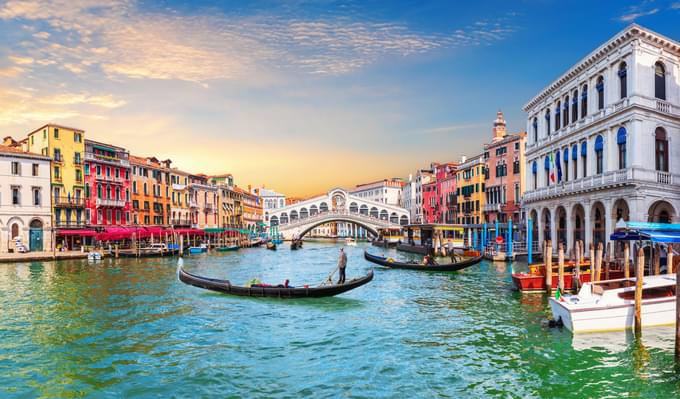
Popular Related Destinations
Our Partners
Switzerland Tour Packages
Reviewed by Thrillophilia Switzerland Operations Team
Updated as of May 2026
Switzerland Tour Packages in 2026 start from INR 100,000 and go up to INR 320,000, covering scenic destinations like Paris, Rome, and Venice while bringing together some of the most iconic Swiss landscapes and experiences.
Rated 4.7 stars by over 7,000+ verified travellers, Thrillophilia’s Switzerland tour packages combine scenic train journeys, mountain excursions, and guided sightseeing with enough leisure time to keep the trip comfortable and enjoyable. From watching sunsets near Lake Geneva and standing atop Jungfraujoch to experiencing Mount Titlis and exploring alpine towns with wooden chalets, each itinerary is designed to help travellers experience Switzerland beyond just city hopping.
Our itineraries are planned around Switzerland’s famous rail routes, practical intercity travel, and well-paced mountain experiences while also allowing travellers to comfortably explore destinations at their own pace. Depending on the route and duration, packages can also include destinations like Lucerne, Zurich, and Amsterdam.
Our packages are available across different budget ranges suitable for Indian travellers, with clear visibility into inclusions such as accommodations, transportation, selected excursions, and optional add-ons. We also provide complete assistance for the Schengen visa application process, which generally takes around 10-15 working days. Comfortable stays, transfers, excursion support, and 24/7 on-ground assistance are included across packages for a smoother travel experience.
To help travellers experience Switzerland more seamlessly, Thrillophilia has also partnered with Switzerland Tourism. With Thrillophilia’s Switzerland tour packages, the focus remains on creating a comfortable and memorable travel experience tailored to different travel styles and preferences.
Switzerland Tour Overview: Costs, Duration & Planning
- Price Range: INR 100,000 to INR 320,000 per person, depending on season, duration and routes
- Duration: 5–12 days
- Popular Plans: 7–9 day trips usually cost INR 130,000 to INR 190,000 per person.
- Inclusions: Accommodations, intercity land transfers and selected flights, breakfast, selected activities depending on the package, and Swiss Rail Pass planning.
- Thrillophilia Support: Fully customisable itineraries and 24/7 on-ground support.
Switzerland Tour Package Price - 2026 Breakdown by Duration
Our range of Switzerland packages suits the needs of everyone. Whether you're a solo traveller, a first-time visitor, touring with family or on your honeymoon, our travel experts have got you covered.
Your trip duration and areas of coverage become your biggest price drivers. This is the breakdown of our packages’ basic elements so that you understand your Switzerland trip cost and coverage better.
Swiss Short Break
- Duration: 5-6 days
- Route: Zurich, Lucerne, Interlaken
- Price (Land-only): INR 100,000 to INR 120,000 per adult
- Best Months: May-June, September-Early October
- Cities Preferring this: Mumbai, Gurgaon, Noida, Surat
Our Insight: This is a very beginner-friendly standard route. If you want to cover some of Switzerland's most famous destinations in a short time, this Swiss package is for you. However, we don’t suggest it if you plan on deeply exploring the parts, as 5 days is not enough time for that.
Know More About: 6 Days Switzerland Tour Packages
Classic Switzerland
- Duration: 7-9 days
- Route: Lucerne, Interlaken, Zermatt
- Price (Land-only): INR 130,000 to INR 190,000 per adult
- Best Months: June-September, December-February (for winter activities)
- Cities Preferring this: Bangalore, Pune, Chennai, Ahmedabad
Our Insight: This is one of our most popular durations for Switzerland trips with honeymooners and families. You get to explore multiple regions without rushing through them. This duration allows for more than one overnight stop and actually lets you experience Switzerland without tiring you out.
Extended Scenic Switzerland
- Duration: 10-12 days
- Route: Classic route + Montreux or Bernina region
- Price (Land-only): INR 180,000 to INR 240,000 per adult
- Best Months: June-September, Late December-March (winter experience)
- Cities Preferring this: Jaipur, Kolkata, Lucknow, Indore, Chandigarh
Our Insight: If you like to slow down and take in one region at a time, this is the duration for you. You also cover more scenic journeys by train, mountain regions and guided excursions. Over 62% of our solo travellers go for this duration to cover areas more thoroughly (based on Thrillophilia’s internal booking data, 2026)
Switzerland + Europe
- Duration: 10-14 days
- Route: Swiss Alps with Paris or Italy
- Price (Land-only): INR 220,000 to INR 320,000 per adult
- Best Months: May-June, September-Early October
- Cities Preferring this: Delhi, Hyderabad, Kochi, Ludhiana
Our Insight: This includes the extended itinerary along with a Paris or Italy tour. Perfect for those who want maximum coverage but at a slow, relaxed pace. This duration and package give you the most immersive experience of the Alps. Many of our honeymooners choose this package with a Paris extension for a complete romantic escape.
Thrillophilia Traveller Note:
Lakshmi, who booked the Bern Sightseeing Tour, said, “Had a fantastic experience with Thrillophilia on our 10-day trip to Switzerland and Italy. The itinerary was well planned as per our requirements. Hotels booked were well within walking distance from the nearest bus/ tram/ train stations. Thank you so much, team, for letting us experience this amazing trip in its full exuberance. Wonderful experience!!”
Verified Thrillophilia international booking, January 2026 departure
What is included in Thrillophilia’s Switzerland tour packages
Core Package Inclusions:
- Accommodations
- Intercity transport
- Selected mountain experiences
- 24/7 on-ground support
- Complete itinerary customisations
- Daily breakfast
Optional Add-ons
- Flights: International flights from India or flight transfers during the trip
- Meals: Apart from breakfast, other meals are not included in the core package. Unless stated otherwise.
- Visa Support: Schengen visa guidance and assistance during documentation.
- Passes and Upgrades: Swiss Travel Pass, Half Fare Card, Saver Day Passes, mountain excursions and scenic train journeys not mentioned in the itinerary and class upgrades.
- Travel Insurance: For INR 500-1,000 per person, we highly recommend purchasing travel insurance before your Switzerland tour packages. This helps you rest assured in case of any unwelcome issues, knowing that we have your back.
Which Factors Affect Your Switzerland Trip Pricing the Most
- Travel Season: July to August and Christmas to New Year are the peak seasons for Switzerland tours. If you want to avoid the inflated prices of this window, travel in May, September, and October instead.
- Mountain Choices: Jungfraujoch, Titlis, and Gornergrat affect the pricing a lot because of route differences. They also vary based on what winter activities they offer.
- Scenic Trains: The Glacier Express and Bernina Express, although they provide a beautiful experience of Switzerland’s nature, also drive up the price when added.
- Hotel Choice: Lake or mountain view stays cost way more than hotels selected for proximity to stations.
- Rail Pass Selection: Rail passes need to be chosen carefully. We help you select ones that align with the flow of your Switzerland itinerary. An incorrect choice can unnecessarily increase your cost.
How Does Thrillophilia Keep the Cost Under Control
- Choosing the Right Train Passes: We book passes that are not just scenic but actually practical in transferring you to your next destination. We analyse your complete route with individual tickets and the Swiss Travel Pass with Half Fare and Saver Day discounts. We only choose those that are practical and cheaper without limiting your experience.
- Carefully Choosing Your Trip Highlights: Instead of spending a lot for every day of your trip, we dedicate one or two days to be the highlight of your trip. Depending on our weather estimations, we pick the best day for a mountain or lakeside stay as well as your scenic train journey. The rest of your stay is mapped for practicality with train routes and station-adjacent hotels.
- Efficient Routes: We always suggest and plan base-first trips. This lets you avoid any backtracking and multiple packing. The best thing is that it helps in saving travel time, extra transfer costs and daily expenses without risking your experience.
How to Save the Most on a Budget Trip to Switzerland from India
Switzerland is a premium destination, and with proper budgeting, it can be within your reach. You can actually tour Switzerland with us at a great price. Here are some tips from Thrillophilia’s destination experts that can make your trip cheaper:
- Late April to May and mid-September to October are the best windows to save 20-30% on flights and hotels. The peak prices drop during this time, and the majority of the crowd goes away. So hotels and flights are cheaper due to lower demand!
- If you are on a fast-paced trip, go for the Swiss Travel Pass starting at INR 22,500-INR 26,000 with unlimited trains, buses and boats. This might sound like a lot, but it helps save on travel expenses, especially if you have a busy itinerary.
- Go for the Swiss Half Fare Card if your itinerary has multiple mountain excursions and has a slower pace. You get it for INR 14,000 approx. and 50% off most transport. It helps you save a great amount on mountain excursions, which are usually one of the most expensive parts of your trip.
- Mount Titlis and Harder Kulm are the best budget mountain excursions. Titlis is cheaper than Jungfraujoch and gives you rotating cable cars with both snow and glacier caves. Harder Kulm is the cheapest viewpoint amongst all and offers beautiful visuals, especially during sunsets.
As per Thrillophilia’s internal booking team, it will cost you approximately INR 8000 to INR 12000 per person daily if you’re on a budget trip to Switzerland.
Thrillophilia Traveller Note:
Sneha Borawake, a traveller from Bangalore, who booked our Spectacular Swiss Charm | FREE Glacier 3000 Tour, said, “This Swiss vacation exceeded our expectations in terms of planning and overall comfort. The coordination between the different mountain excursions was handled with extreme precision. We booked our Switzerland tour package through Thrillophilia, and the entire itinerary was thoughtfully planned to maximise our time. The hotels were centrally located, which made evening walks around Chapel Bridge very convenient. The Swiss train journeys were the highlight, offering breathtaking views in a very relaxing environment.”
Verified Thrillophilia international booking, January 2025 departure
Do Indians Need a Visa for Switzerland
Yes, Indians need a Schengen short-term visa for a visit to Switzerland. The application process is very easy. However, what you do need to be mindful of is when you will be applying and the documents required.
Here’s a quick guide:
1. When Should You Apply: Apply at least 4-6 weeks before your trip. Although your visa gets processed within 10-15 working days, peak seasons affect this time stretch a lot. It’s best to play it safe with visa applications.
2. Document Checklist for Switzerland Schengen Visa Application
- Recent photographs (2 recent passport-size photos)
- Properly validated passport (original+copies)
- Travel insurance with minimum €30,000 or INR 3,244,000 coverage
- Flight plan and proof of accommodation
- Complete travel itinerary
- Proof of employment and financial documents
How Switzerland Tours are Planned And Executed by Thrillophilia
Our Switzerland holiday packages are not just a list of destinations put together randomly. They are planned with careful observation of the best travel routes possible, according to various durations and regions to cover. Every single itinerary is designed with the traveller in mind. We consider your pace, habits, preferences, likes, and dislikes to make the itinerary unique to you.
We, at Thrillophilia, confirm that hotels, transfers, passes, mountain access and on-trip assistance will be available to work in sync with the itinerary before any of them is locked down. Our customisations only start when we are sure of certain checkpoints like pricing, availability and coordination.
We do this to avoid any kind of last-minute changes or cancellations that might affect the flow of your trip. This ensures reassurance for both you and us and enables us to make sure your trip doesn’t face an issue that we are not ready for.
What 'Feasibility-checking' Means for Switzerland Tours
There are certain factors that can risk the entire tour if not checked in with and confirmed early on:
- Primary Confirmations: Confirming the availability for hotels, mountain lifts, and scenic trains
- Timing: Lift windows, daylight hours, crowd behaviour, and practical transfer times.
- Transfer Logistics: Pickup and drop-off timings, rail-first routing, and private/shared transfers only when necessary.
- Seasonal Limitations: Lift maintenance, weather disturbances, and timetables for seasonal routes or changes.
After we confirm all availability, our travel experts start locking down on the trip elements in a way that protects the flow of your itinerary.
- Hotels: The very first thing we confirm. We prioritise hotel locations to be near stations or airports for easy, hassle-free transfers.
- Mountain Access: We schedule peaks according to specific time windows and dates for safety.
- Scenic Trains: They are aligned completely with your itinerary and are functional as important transfer mediums, not just for the experience.
- Shared/Private Transfers: These are only confirmed after the confirmation of hotels and rail logistics.
How Do We Plan Mountain Excursions on the Ground
We don’t assume year-round availability for mountain visits. We schedule peaks based on local guidance and specific time windows. This ensures safety for all our travellers, especially for seniors and children.
Our Approach for Scheduling Major Peaks
- Final mountain scheduling is confirmed only after checking live operating windows and same-week forecast reliability.
- We run daily checks for safety clearance in snow-play areas and glacier parks.
- Popularity is not the factor we choose peaks based on. Cloud cover and weather assessment are very important to ensure clear visuals and safety.
This helps you avoid foggy visibility on a ‘scenic’ cable car ride or a train ride.
How Do We Select Rail Tickets And Passes
The railways of Switzerland are one of its major attractions. Our selections, however, are not based on the scenery but on practicality. Your transfers are planned to be seamless so that you don’t feel rushed or fall behind in your itinerary at any point of your trip.
- Route-focused planning between the Swiss Travel Pass, Half Fare Card, or Saver Day Pass.
- We only include scenic trains when they add to the flow of the itinerary.
- Travel direction, timings, and tiers are chosen to avoid disturbing any mountain or hotel schedule.
What This Saves: Paying for passes that don't match the route or have no use.
How Do We Manage On-Ground Support
Rails form a very important part of your transfer schedule. But Thrillophilia’s on-ground assistance team plans for backups in case any issues arise.
- In case of missed connections or delays, we plan for alternate routes in advance so that your itinerary doesn’t get delayed.
- We don’t rely on a single vendor but on a reliable network. So if one cancels or fails, you have enough buffer time and other options to make up for lost time.
What This Saves: Risking a whole day’s itinerary in case one vendor or transfer fails.
Thrillophilia’s Insights for Different Traveller Types
After 10000+ successful Switzerland trips from India, here’s what we learned from our different traveller types based on Thrillophilia’s internal booking data for 2026.
- Families: We realised that with families, multiple high-energy activities on the same day don't work out well. Keeping evenings free and relaxed has boosted satisfaction by 30% in our travellers.
- Couples: Try to time your visits early to avoid rush hours. We recently observed over 49% of our couple travellers choosing itineraries with a slower pace and fewer destinations. Couples value quality explorations over a checklist of attractions.
- Seniors: We recommend slow-paced itineraries and mountain visits only after day 3 or 4. Verify the availability of elevators in your hotels beforehand.
- Adventure Seekers: Always prioritise safety with weather conditions. That is one thing technicians cannot guarantee. Consult with our local experts prior to scheduling your activities.
What Can Go Wrong in Switzerland And How We Handle Them
We already account for possible issues and plan in advance for them. All our tours are designed with buffer time, alternate routes and destinations without compromising your experience.
- What If Mount Titlis Were Closed? We switch to Mount Pilatus via the cogwheel route or Stoos Ridge for a family-friendly alternative.
- What If Jungfraujoch Visibility Is Poor? We convert our day’s focus to the lake or shift to Schilthorn
- What If a Train Connection Is Disrupted? Don’t worry, we won’t have to rewrite the entire day’s itinerary. Alternate routes and enough buffer time are already planned in advance for every itinerary.
How We Customise Switzerland Trip Packages Based on Where You’re Travelling from
Our customisations are always applied after a careful study of our travellers and their style. If you don’t wish for a specific element, feel free to let us know, and we’ll be happy to change or remove it.
1. Ahmedabad
We understand veg food is a big factor for Ahmedabad travellers. Having meal assurance takes off a lot of stress that comes with international travelling, especially with families. This is why we plan your meal accessibility in advance:
- Clearly defined vegetarian options for daily breakfast.
- Accessible and well-rated vegetarian and Jain restaurants near your hotels in Zurich and Interlaken. For example, Little India and Namaste Oerlikon in Zurich and The Grand Indian and Restaurant Bollywood in Interlaken have great pure-veg options.
- Avoiding accommodations where dining options are limited.
2. Mumbai
Our Mumbai travellers prefer a faster pace. As long as they’re well-organised, Mumbaikers like long days smartly packed with activities. This is why we plan their itineraries with back-to-back activities with leisure time in between for maximum coverage. Just how they like it.
- Early slots to Jungfraujoch or Titlis to avoid the general crowd and rush.
- Prioritise minimal hotel changes with smart routes that flow with the itinerary. (Zurich to Interlaken to Lucerne)
- When requested, we curate back-to-back highlight days. (Jungfraujoch, followed by Zermatt the next day)
- We limit scenery-focused trains and prioritise direct intercity trains if we’re running short on time.
3. Bangalore
Bangaloreans like to relax, not rush. We curate their packages just like their coffee and conversation-heavy weekends in Indiranagar or Koramangala. Slow, fulfilling, and great for memories.
- Leisure evenings in Lucerne for cafe-hopping and long walks around the lakeside. (Our Bangalore travellers loved Two Hands, Rokka and Mill-Feuille Lucerne during their visit.)
- Hotels near Chapel Bridge and Weinmarkt give you access to popular and underrated local cafes.
- Seeing how most of our Bangalorean travellers like to stay connected with their work, we prioritise centrally located hotels with strong Wi-Fi.
4. Delhi
Most of our Delhi travellers travel with families. This is why comfort is a big factor for them. We prioritise a smooth stay experience for them, even if that means a more relaxed pace.
- 4-star lake view stays in Lucerne
- Matterhorn-facing room upgrades in Zermatt
- Private airport transfers in Zurich
- Hotels located near family-friendly restaurants like Matti in Andermatt, Rathaus in Lucerne, and Tadka in Zurich.
- Scenic train seat reservations wherever available.
5. Pune
We have observed that Pune travellers like to explore deeply. Our post-trip survey revealed 65%+ of our Pune travellers customise their itineraries to focus on lesser-known regions for their itineraries. They like to take their time, and with a country like Switzerland, we understand why.
- Instead of regular intercity trains, we suggest the GoldenPass Express from Interlaken to Montreux for its visuals.
- A guided walking route in Lucerne covering Chapel Bridge, the Lion Monument and the old town squares
- Properly exploring the Lauterbrunnen valley instead of just a photo session
- We prioritise stays in quieter neighbourhoods rather than centrally located, transfer-focused ones.
6. Jaipur
Similar to Delhi, they also tend to travel with families and big groups, although at a faster pace. Comfort and ease of movement are what we focus on with our Jaipur travellers.
- We arrange for 3-day stays in Interlaken to avoid frequent packing.
- Titlis and Jungfraujoch are planned for separate days each.
- Hotels are chosen with proximity to the station and family-friendly restaurants.
- Shorter walking routes, especially in towns like Lucerne.
Thrillophilia Traveller Note:
Diya Jhaveri, a traveller from Mumbai, who booked the Winter Wonders of Europe | Group Tour Package with Gala Dinner, said, “We booked the Italy package from Mumbai for our anniversary. The private traveller provided was in great condition for the long drives between Rome and Naples. Seeing the sunset at the Spanish Steps was seamless thanks to our punctual driver. The itinerary felt very personalised and comfortable, even during the peak summer crowds.”
Verified Thrillophilia international booking, February 2026 departure
What is the Best Time to Visit Switzerland from India
1. Peak Season: June-August, December
The 18°C to 30°C summertime in Switzerland gives you the clearest views of the Alps. This is the picture-perfect Switzerland you have always known from movies and postcards. -2°C to 7°C in December, with its Christmas markets and festive lights, is yet another reason to visit Switzerland during this time.
These are the windows where you get to enjoy everything from cable cars at Jungfraujoch to paragliding over Interlaken, without any limitations. But the prices are highly inflated due to the demand. This is the most expensive and crowded window to visit Switzerland.
Thrillophilia’s Tip: If you want to travel by the Glacier Express during this time, make sure you book your tickets at least 6 months in advance. The demand is huge during the peak season.
Skip this Season If: You don’t like crowded places and want to travel in Switzerland on a budget.
2. Shoulder Season: April-May, September-October
Switzerland is in full spring bloom with 8°C to 18°C in April. And if you’re a fan of autumns, you’d love the September-October window with a temperature of 10°C to 20°C. Both these windows give you great weather to enjoy Switzerland, but without the peak prices. Near-empty photo spots in Lucerne, a drop in hotels and flight prices, and clear views with the occasional fog. This is perfect if you don’t like travelling in a rush or just want to avoid the peak pricing.
The weather can be unreliable in these windows. Be very careful while booking your excursions during this time.
What Thrillophilia Suggests: Since you won’t be rushing in this window, get the Half Fare Card. Unlimited travel passes would be unnecessary, and you’d save a lot on mountain excursions.
Skip this Season if: You want to experience the winter activities and scenery of Switzerland.
3. Low Season: January-March, November
If you love snow and want to experience every winter activity Switzerland has to offer at -5°C to 5°C, you should choose this window. From fresh snowfalls to last-minute hotel deals, it’s great for our budget-conscious travellers. November at 2°C to 10°C gives you the perfect amount of quietness to take in the views of Switzerland.
The weather during this window is extremely unreliable. Mountain excursions are often cancelled or limited due to safety concerns. The weather can also be foggy for days, so clear views are not guaranteed. But if you’re someone who wants to focus on winter activities rather than a scenic tour, this window can be for you.
Thrillophilia’s Tip: Plan snow trips around peaks, not cities. Plan small cosy experiences instead. Go cafe-hopping or, better even, visit the Lindt Chocolate Factory. You can never go wrong with winter and chocolate.
Skip this Season if: You are a first-timer with no prior experience with cold destinations. You need to be prepared for your plans and excursions to be cancelled due to safety issues for each day.
Popular Switzerland Itinerary by Duration
6 Days / 5 Nights Switzerland Itinerary
Day 1: Arrive in Zurich and transfer to Lucerne. Spend the evening walking along Chapel Bridge and the beautiful lakeside promenade.
Day 2: Take a scenic excursion to Mt. Titlis. Enjoy snow activities, the Ice Flyer chairlift, and stunning Alpine views before returning to Lucerne.
Day 3: Travel to Interlaken via panoramic train routes. Explore the charming town and enjoy leisure time by Lake Thun or Lake Brienz.
Day 4: Visit Jungfraujoch – the Top of Europe. Experience breathtaking glaciers, snow-covered peaks, and Europe’s highest railway station.
Day 5: Head to Zurich and explore the Old Town, Bahnhofstrasse, and Lake Zurich. Spend the evening shopping or trying Swiss chocolates and fondue.
Day 6: Departure from Zurich with unforgettable memories of Switzerland’s mountains, lakes, and scenic train journeys.
8 Days / 7 Nights Switzerland Itinerary
Day 1: Arrive in Zurich and travel to Lucerne. Relax by the lake and explore the city’s charming streets and cafés.
Day 2: Enjoy a full-day excursion to Mt. Titlis with snow experiences, cliff walks, and panoramic cable car rides.
Day 3: Transfer to Interlaken through scenic Swiss countryside and spend the evening exploring the town.
Day 4: Take a day trip to Jungfraujoch and admire spectacular Alpine landscapes and glacier views.
Day 5: Travel to Zermatt, a picturesque mountain village known for stunning views of the Matterhorn.
Day 6: Enjoy a ride to Gornergrat for panoramic mountain views and spend leisure time exploring Zermatt.
Day 7: Proceed to Zurich and enjoy sightseeing, shopping, and local Swiss cuisine in the city.
Day 8: Depart from Zurich with memorable experiences of Switzerland’s natural beauty and iconic mountain destinations.
Trains & Rail Passes in Switzerland Tour Packages
Understanding the difference between a Travel Pass, a Half Fare Card, and a Saver Day Pass is very important to avoid unnecessary expenses on transport. Now, there is no ‘best’ pass with the most savings that you can just purchase. Passes are only useful when they’re bought depending on your route, duration, and number of mountain excursions on your itinerary.
1. Swiss Travel Pass: Best Friend of Packed Itineraries
The Swiss Travel Pass is your all-in-one ticket for unlimited free access to all local transport. Moreover, it gives you free entry to over 500 museums and 50% off on mountain excursions. It starts at CHF 232-254 (INR 22,500-INR 26,000) for a 2nd class, 3-day validity.
Our itineraries are built by a team with over eight years of routing experience in the Swiss cantons. We don’t just carry over insights from previous years; we update them every 6 months to ensure accuracy for our travellers.
You Should Choose This Pass If:
- Your itinerary has multiple long train journeys.
- Your route has trains, buses, and boats across multiple areas.
- You don't want to purchase multiple tickets for all your transfers.
- Saving on museums and local transport is a priority.
Expert Insight: If you are not sure how much money you’re saving with this pass, individually price your transport routes first. Then compare it with the past expenses. If it’s not making much difference, then it’s not for you.
2. Half Fare Card: Best for Slower Itineraries
The Swiss Half Fare Card gives you a flat 50% off on most trains, buses, boats, and mountain excursions in multiple regions. It costs approx. CHF 150 (INR 14,000) with a 30-day validity.
This Card Is for You If:
- You’re staying overnight in multiple bases
- You don't have multiple long intercity train journeys planned.
- Your itinerary is mountain excursion-heavy.
- You’re okay with buying tickets at discounted prices individually.
Expert Insight: Some mountain excursion tickets have bundled prices with added experiences. If you have the Half Fare Card, you get an even better deal with them.
3. Saver Day Pass: Best for Fixed Itineraries
This pass gives you unlimited access to most local transport with a 24-hour validity. The prices start at CHF 29 (INR 3500 approx.) for a half-fare discount and CHF 52 (INR 6200 approx.) for a full-fare discount.
Choose This Pass If:
- You know exactly which days you’ll be travelling
- You have individual travel-heavy days with a gap between them.
Expert Insight: Combine your Saver Day Pass with a Half Fare Card. The discounted prices drop even further. Perfect for when you have travel-heavy days but with a gap.
Before You Purchase Any Swiss Travel Passes
- Mountain excursions are never completely free of cost
- Seats for scenic trains always cost extra
- Premium classes, dining cars, and glacier access cost extra
Scenic Trains in Switzerland - Glacier Express, Bernina, and GoldenPass
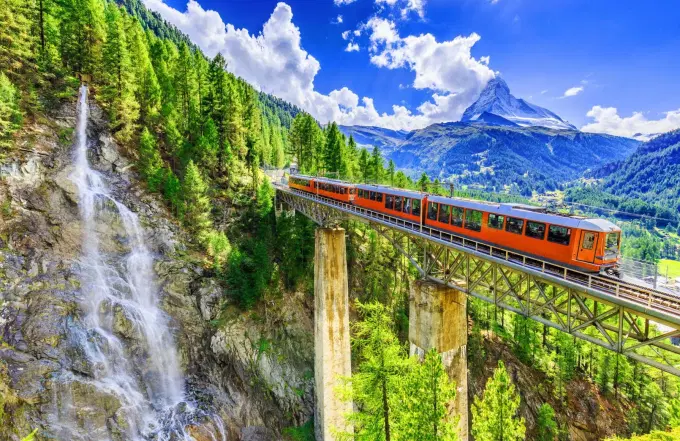
1. Glacier Express: Perhaps the most famous train in Switzerland. It’s an 8-hour train journey connecting Zermatt (near the Matterhorn) and St Moritz in the Swiss Alps.
Expenses: Tickets start from INR 19,000 (CHF 159) in 2nd class without the Travel Pass.
2. Bernina Express: This is perfect for a day trip from St Moritz or Chur. Since it runs from the glaciers to the southern valleys, you get to take in all of Switzerland’s nature in one train ride.
Expenses: The seat reservation fee is CHF 26–36 (approx. ₹2,500 - ₹3,500) per seat, with tickets starting at roughly INR 6,000 without any Travel Pass.
3. GoldenPass Express: If your itinerary has Lucerne–Interlaken and Interlaken–Montreux segments, you should go for this one. This is one of the most comfortable train rides you’ll have because of their newer rolling stock.
Expenses: The mandatory seat reservation costs around CHF 20, or approx. INR 1,900. Tickets start from INR 3,400 for standard scenic trips.
Jungfraujoch vs Titlis vs Gornergrat - Which Peak is Right for You
1. Jungfraujoch: If you’re based in Interlaken or Grindelwald, this is your best choice. If you time it just right, it gives you Switzerland’s most dramatic mountain experience. It’s the most popular choice with our first-time Switzerland travellers. The visibility at Jungfraujoch can change quickly after noon, which is why early departures are usually preferred.
Expenses: From Interlaken/Grindelwald, tickets cost INR 8,000–15,000, while Zurich-origin day excursions cost ~INR 31,000, including transfers.
2. Titlis: This peak is the easiest to access when you’re based in Lucerne. This works best if you’re travelling with children since Titlis offers snow play, the Ice Flyer and other walkable attractions.
Expenses: Day trips from Lucerne or Zurich start around INR 19,000 per adult. Children’s tickets are priced at around half the price of adult tickets.
3. Gornergrat: This is the calmest peak in Switzerland compared to Jungfraujoch and Titlis and is the closest to Zermatt. According to our post-trip survey results, 78% of our couple travellers favour this excursion. The open views of the Matterhorn and the slower pace explain why.
Expenses: Return tickets for the Gornergrat Cogwheel Railway start around INR 20,000 per adult and approx. INR 5,200 for children.
The prices for all the peaks vary with the seasons throughout the year. If you’re planning to visit during the peak seasons, we suggest booking your excursion tickets at least 3 months in advance.
Switzerland Highlights You Shouldn’t Miss
1.Jungfraujoch Excursion
Known as the “Top of Europe,” Jungfraujoch offers breathtaking glacier views, snow activities, and scenic railway journeys through the Swiss Alps. It remains one of Switzerland’s most iconic mountain experiences for first-time visitors.
2. Glacier Express Train Journey
The Glacier Express is one of the world’s most scenic train rides, connecting Zermatt and St. Moritz through dramatic alpine landscapes. Large panoramic windows make the journey especially memorable during winter and autumn.
3. Explore Lucerne & Chapel Bridge
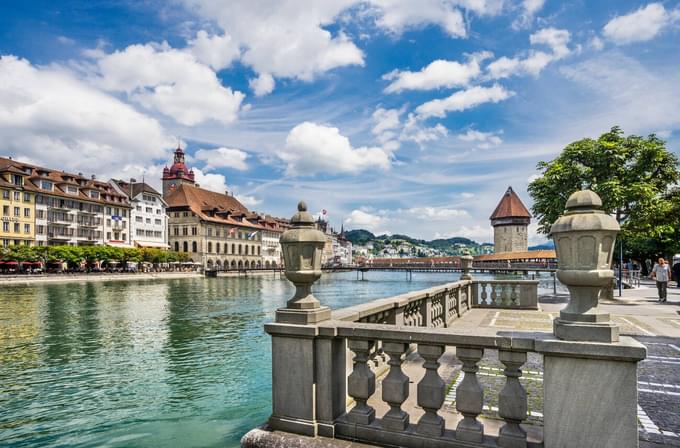
Lucerne is famous for its lakeside beauty, charming old town, and the historic Chapel Bridge. The city offers a relaxed atmosphere perfect for café hopping, evening walks, and scenic lake cruises.
4.Visit Mount Titlis
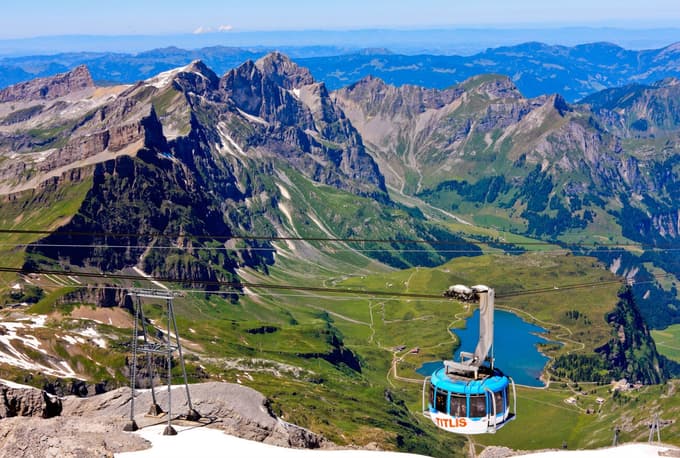
Mount Titlis is popular for its rotating cable car, glacier cave, suspension bridge, and snow experiences. It is one of the most family-friendly mountain excursions in Switzerland.
5.Experience Interlaken Adventures
Interlaken is Switzerland’s adventure capital, offering activities like paragliding, skydiving, hiking, and boat rides. Surrounded by lakes and mountains, it is ideal for both thrill-seekers and nature lovers.
6.Enjoy Matterhorn Views from Gornergrat
Gornergrat offers some of the clearest panoramic views of the Matterhorn and surrounding peaks. The cogwheel train ride and peaceful alpine atmosphere make it especially popular among couples and photographers.
7.Ride Switzerland’s Scenic Rail Routes
Switzerland’s rail journeys are an experience in themselves, passing through lakes, valleys, waterfalls, and mountain villages. Routes like Bernina Express and GoldenPass are especially loved for their breathtaking scenery.
Why Should You Choose Thrillophilia for Your Switzerland Trip from India?
With a 4.8 rating, we were awarded Best Leisure Tours Brand by The Economic Times Travel and Tourism Annual Awards. But this is not why you should choose us for your upcoming Switzerland trip.
1. 100+ Expert-Curated Packages: Our packages are not just destinations thrown together, but designed to match the travel behaviour of our travellers. We consider their location, pace, preference, food and medical issues before putting together an itinerary. Every detail, every suggestion is based on careful consultation with local experts. We account for every possible issue and plan for alternatives in advance so that you don’t deal with any last-minute changes.
2. Verified Local Operators and Partnerships: Every guide, driver or private activity operator we provide is completely verified by Thrillophilia. We can vouch for their expertise and insights to make sure your trip goes smoothly. We also have partnerships with the Swiss railways to get early insights on passes and seats so that we can book your train rides without any hassle.
3. Transparent Pricing: Before your itinerary is locked down, we explain every aspect of money distribution to you. From bus rides to mountain excursions, we calculate and consider all. There are no surprise costs that would be added after your trip. No itinerary is changed after it is personally approved and locked down by you.
4. 24/7 On-trip Assistance: An international trip has many factors that can go wrong. We prepare for all of them. This is why we have 24/7 top-notch on-ground trip assistance with partnerships with the top-ranked local operators and guides. Your local assistance is coordinated across the cities you travel to, along with complete itinerary tracking via our mobile app. In case of any issues, reach out to us immediately. Our team aims for immediate contact with minimal waiting time.
Switzerland Packages | Duration | Price |
|---|---|---|
| Best of Switzerland & Italy | Roman Streets to Snowy Alps | 9 days & 8 nights | INR 1,68,342 |
| Glimpse Of Switzerland | FREE FIFA Museum Tickets | 5 days & 4 nights | INR 1,00,195 |
| Amsterdam, Paris & Lucerne Tour with FREE Paris Pass | 7 days & 6 nights | INR 1,35,391 |
| Europe Golden Trio | Switzerland, Amsterdam & Paris Tour | 8 days & 7 nights | INR 1,73,442 |
| Classic Europe | From Roman Ruins to Amsterdam Canals | 13 days & 12 nights | INR 2,55,473 |
| Western Europe In A Nutshell | 11 days & 10 nights | INR 1,72,448 |
| Classic Switzerland | Peaks, Lakes, and Alpine Trails | 7 days & 6 nights | INR 1,26,347 |
| Grand Europe Group Tour Package | 15 days & 14 nights | INR 2,99,274 |
| Switzerland Trails | First Class Swiss Pass Exclusive Limited Deal | 10 days & 9 nights | INR 1,62,411 |
| Grand European Journey | Group Tour Package | 13 days & 12 nights | INR 3,12,836 |
| European Splendor | Group Tour Package | 10 days & 9 nights | INR 2,71,631 |
| Wonders of Switzerland and Paris | Glitz & Glaciers | 7 days & 6 nights | INR 1,35,442 |
Switzerland Tour faqs
What currency is used in Switzerland?
The Swiss use the Swiss Franc (CHF) as their official currency. While some places accept the euro, the Swiss franc is the most widely accepted currency there.
Jungfraujoch vs Titlis: Which one should I choose?
Jungfraujoch is known for its dramatic glacier experience. It’s a good option if you are based in Interlaken and can have early starts for clear views and fewer crowds. Titlis is more family- and shorter-trip-friendly because it doesn’t tire you out. It’s the easiest to access from Lucerne.
Is Switzerland a good choice for first-time Europe travellers?
It’s a great choice for first-time Europe travellers. Switzerland has very well-connected local transport, a huge range of activities for all ages, and good Indian food places with vegetarian options, and most people communicate easily in English.
How early should I book Switzerland packages?
For peak seasons, book at least 6 months in advance to ensure availability of all experiences. For shoulder and low seasons, booking 3-4 months in advance is enough.
Can I customise my Switzerland tour package?
Yes, you can very easily, and we recommend that you do so. All our packages are fully customisable. You can customise routes, add additional activities, extend your stay, upgrade your hotels and rides, add meals, and book flights for intercity travel.
What Indian restaurants are there in Lucerne/Interlaken?
Kanchi Indian Restaurant and Bombay Alley in Lucerne are highly recommended by our experts. Restaurant GourmIndia Luzern in Lucerne and Madras Jungle in Interlaken are very reliable vegetarian restaurants, according to our travellers.
What is the Switzerland Schengen visa fee in 2026?
For adults, it’s INR 8800 to INR 9400. For children between ages 6 and 12, it’s INR 4400 to INR 4700. For children below 6, it's free. Please note there’s an additional VFS service fee for INR 2500 to INR 2700.
Can senior citizens visit Jungfraujoch?
Yes, they very easily can, as per our post-trip survey results. Jungfraujoch is fully accessible by train, without any trekking involved. In case of breathlessness, the trains are all equipped with oxygen support. With simple breath precautions, it's very senior-friendly.
Can I use my Indian SIM card in Switzerland?
Jio/Airtel, etc. regular monthly packs won't work in Switzerland. We recommend getting a local Swiss SIM or European eSIM or activating an international roaming pack before departure. You should also download the SBB app and your travel route offline before you start your first train journey.
Are digital payments easily available in Switzerland?
Digital payment methods are widely available in Switzerland, even in local transport. However, you should still carry some cash in case you visit small cafes, bakeries, public toilets, or village markets.
Can I visit Switzerland and France/Italy in one trip?
Yes, you definitely can. In fact, it's a popular choice for many visitors. A Schengen visa covers all of Italy, Paris, and Switzerland. Both Paris and Milan are very well-connected with Switzerland and take just a couple of hours to reach.
What is the CHF to INR exchange rate?
By 2026 estimations, CHF 1 currently equals INR 117.55.