


Best Deals
Family Tours
Tourism Board Alliances
Budget Tours
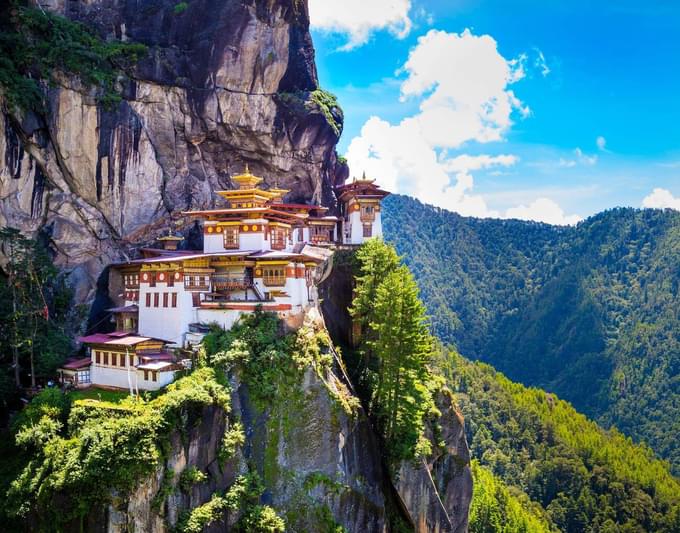
More Bhutan Packages
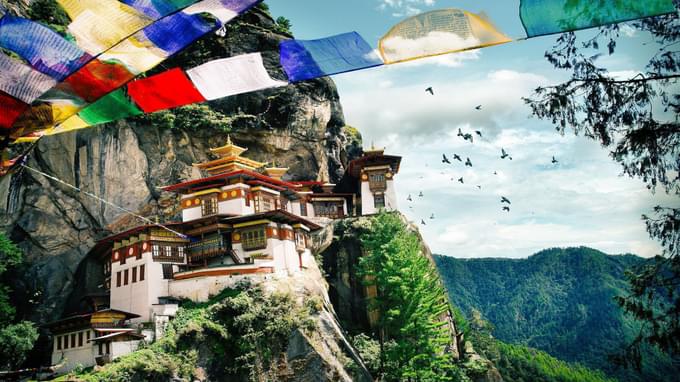
Glimpse of Bhutan | From Sacred Sites to Scenic Wonders
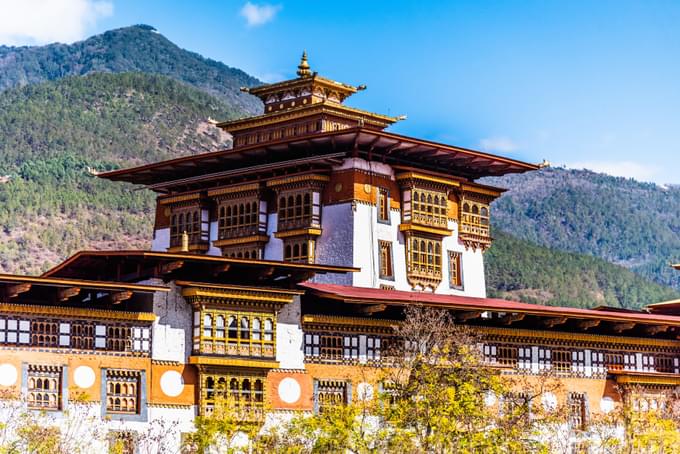
Wonders of Bhutan | FREE Excursion to Paro
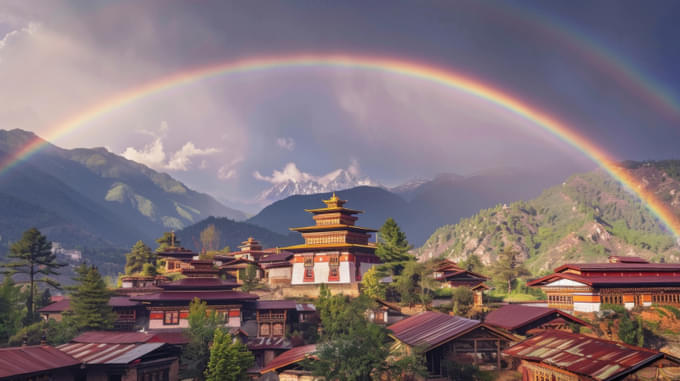
Experiential Bhutan | Free Gangtey Gompa Monastery Excursion
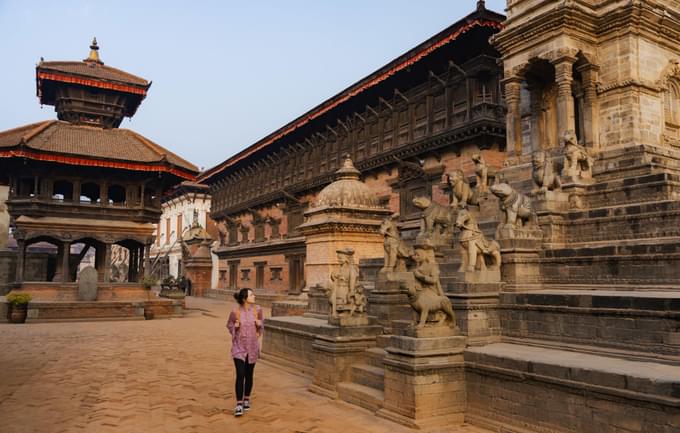
Bhutan & Nepal Vacation | COMBO DEAL
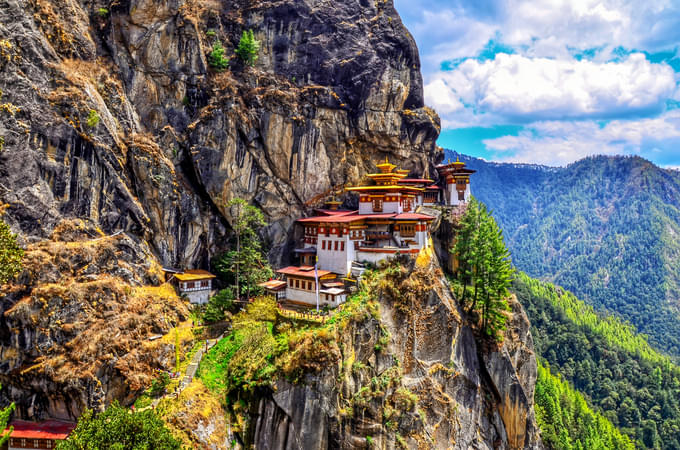
Explore Bhutan with FREE Taktsang Monastery Tour
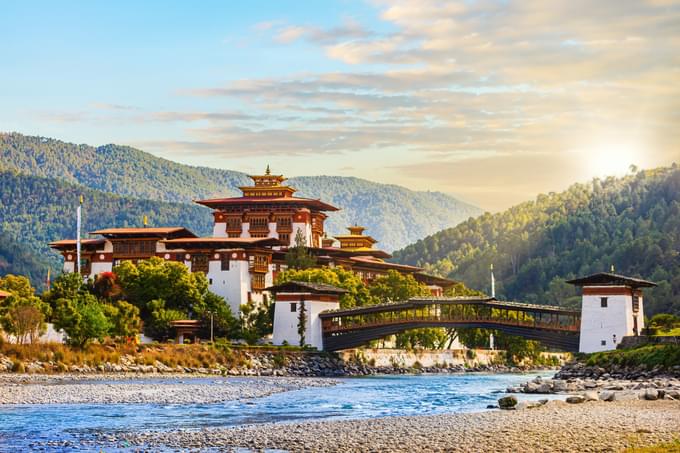
Holidays in Bhutan | FREE Dochu La Pass Excursion
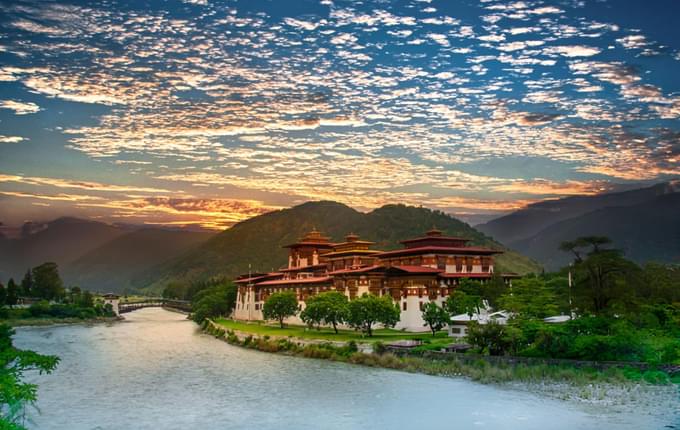
Gems of Bhutan | Thimphu Punakha & Paro
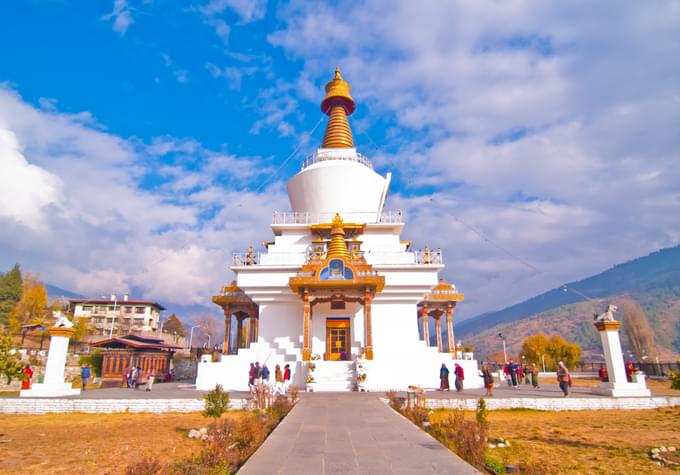
Escape to Bhutan | From Sacred Trails to Highland Tales

Instagrammable Bhutan | Couple Special
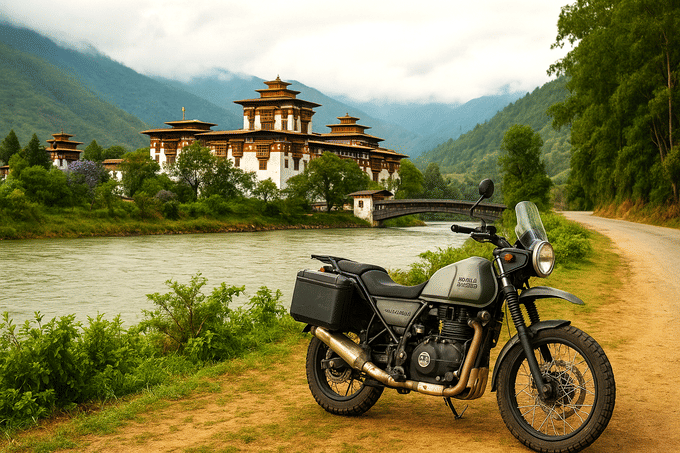
Bhutan Bike Expedition | Ride the Land of the Thunder Dragon
Popular Related Destinations
Our Partners
Bhutan Tour Packages
Reviewed by Thrillophilia Bhutan Operations Team
Updated as of June 2026
Bhutan tour packages for 7 days and 6 nights range between INR 28,500 and INR 60,000. These packages cover major destinations such as Phuntsholing, Thimphu, Paro, Punakha, and Bumthang. These packages include stays, meals, internal transfers, permits, and visits to key cultural sites like Punakha Dzong and Tiger's Nest Monastery, along with the mandatory Sustainable Development Fee of around INR 1200 for Indian tourists.
Explore landmarks in Thimphu, such as the National Memorial Chorten, visit Motithang Takin Preserve, or discover traditional Bhutanese crafts at the Handicrafts Emporium. Nature lovers can head to Paro for the famous Tiger’s Nest Monastery trek.
If you are planning an extended Bhutan holiday package by a day or two, you can also add Gangtey Monastery to your itinerary and spot black-necked cranes in Phobjikha Valley during the winter months.
Interestingly, Bhutan stands out as the world’s only carbon-negative country, where tourism follows a regulated, low-impact model. So, if you are an environmentally conscious traveller, Bhutan is the perfect destination for you.
Bhutan Tour Packages: Overview
- Price Range: INR 28,500 to INR 60,000 per person for 7-day and 6-night Bhutan tour packages. The cost of the package increases depending on duration, route taken, and the type of accommodation you choose.
- Duration: Most packages run between 6 and 13 days, offering flexible itineraries suitable for both short getaways and extended tours.
- Accommodation: Options for accommodations include deluxe hotels or comfortable 3-star and premium 4-star hotels, giving travellers the freedom to choose based on their budget and preferences.
- Cities Covered: Major destinations include Phuntsholing, Thimphu, Paro, and Punakha, where you can experience the best of western and central Bhutan.
- Inclusions: Bhutan Sustainable Development Fee (SDF) permits, guided tours to iconic sites like Punakha Dzong and Tiger's Nest Monastery, internal transfers, and selected meals.
- Best Time to Visit: March to May for spring blooms and October to December for clear skies and festival season.
Bhutan Trip Cost from India: Budget Breakdown
Based on booking patterns from over 9,000 Bhutan travellers who have travelled with Thrillophilia, with an average trip rating of 4.8, Bhutan tour packages are inclusive of stays in standard, deluxe, or luxury hotels as selected in the package, local transfers in SUVs, sedans, or tempo travellers based on group size, meals as per the selected meal plan, and sightseeing as per the selected itinerary. Here are the different kinds of packages Thrillophilia offers based on your budget preferences.
Package | Duration | Destinations Covered | Land Price / Person | With Flights (Approx.) | Best For |
Group Tour with Chele La Pass Excursion | 7 days / 6 nights | Phuentsholing, Thimphu, Paro | INR 28,500 | INR 39,000+ | First-time travellers, friend groups, solo travellers |
Cultural Tour with Dochu La Pass Excursion | 7 days / 6 nights | Thimphu, Nubding, Punakha, Paro | INR 39,890 | INR 50,000+ | Couples, families, first-time travellers wanting Punakha |
Sightseeing Tour from Sacred Sites to Scenic Wonders | 7 days / 6 nights | Phuentsholing, Thimphu, Paro | INR 45,950 | INR 56,000+ | Culture seekers and families |
Adventure Bike Tour across Bhutan | 7 days / 6 nights | Phuentsholing, Thimphu, Punakha, Paro | INR 49,350 | INR 60,000+ | Adventure travellers and biking enthusiasts |
Couple Special with Premium Stays | 7 days / 6 nights | Phuentsholing, Thimphu, Paro | INR 57,500 | INR 68,000+ | Honeymooners and couples seeking a premium experience |
Note: All prices listed above are per person based and include the Sustainable Development Fee of INR 1,200 per adult per night. Flight estimates are approximate and based on round-trip fares from major Indian cities. Final pricing varies by travel season, group size, and hotel choice.
Package Inclusions:
Hotel accommodation throughout, all meals as listed above, internal transfers in private vehicles, Entry Permit, Route Permit, Sustainable Development Fee, guided sightseeing at all destinations, and Tiger's Nest trek with an experienced local guide.
Package Exclusions:
Entrance fees at sightseeing places, lunch (unless specified), expenses of a personal nature, and meals not mentioned in the itinerary.
Best-selling 7-Day Bhutan tour packages Itinerary of Thrillophilia
Day 1: Arrival in Bagdogra / Siliguri | Transfer to Phuentsholing
- Upon arrival at Bagdogra Airport or New Jalpaiguri Railway Station, board your transfer to Phuentsholing, the gateway town to Bhutan, a drive of around 4 to 5 hours via NH-17.
- Check in to your selected stay upon arrival and take some time to relax and freshen up.
- Head out to explore the locality and visit key attractions, including Bhutan Gate, Zangto Pelri Lhakhang, and Karbandi Monastery.
- In the evening, take a stroll along the picturesque Torsa River and soak in the surroundings.
- Return to the hotel for dinner and an overnight stay.
Day 2: Phuentsholing to Thimphu
- Check out of your hotel and head to the Immigration Office in Phuentsholing to collect your Entry Permit before crossing into Bhutan.
- Continue to Thimphu, the capital city of Bhutan, enjoying a scenic 4-hour drive through charming mountain villages and winding Himalayan roads.
- Check into your hotel upon arrival and take some time to relax and settle in. Thrillophilia handpicks every stay to ensure comfort and convenience, because a good hotel experience is what makes a trip truly memorable. One of our verified traveller Rajiv Pothala, who booked the INSTAGRAMMABLE Bhutan Group Tour | Excursion to Chele La Pass package, shared his experience saying “hotel location in Phuentsholing and Paro was good and within reach.”
- Spend the day at leisure and explore the city at your own pace, visiting the National Institute for Zorig Chusum, Ludrong Memorial Garden, and Zilukha Anim Dratshang.
- In the evening, wander around the lively Clock Tower Square, browsing its array of shops and restaurants.
- Return to the hotel for dinner and an overnight stay.
Day 3: Thimphu Sightseeing Tour
- Board your transfer in the morning for a full-day sightseeing tour of Thimphu.
- Visit the National Memorial Chorten, an iconic stupa dedicated to world peace and prosperity.
- Explore the Motithang Takin Preserve, home to Bhutan's national animal, the Takin.
- Head to Simtokha Dzong, the oldest fortress in Bhutan, and take in its centuries-old architecture.
- Marvel at the towering Buddha Dordenma, a 51-metre colossal statue of Buddha overlooking the Thimphu Valley.
- Visit Tashichho Dzong, the seat of Bhutan's government and religious affairs, and the Simply Bhutan Museum for a glimpse into traditional Bhutanese life.
- Stop at the Royal Textile Academy to discover Bhutan's rich tradition of handwoven fabrics and craftsmanship.
- Conclude the day with a stroll through the lively Handicrafts Market before returning to the hotel for an overnight stay.
Day 4: Thimphu to Punakha via Dochula Pass
- Check out in the morning and drive to Punakha via the scenic Dochula Pass, situated at 3,100 metres.
- On a clear day, stop to enjoy panoramic views of 108 chortens and snow-capped Himalayan peaks at Dochula Pass.
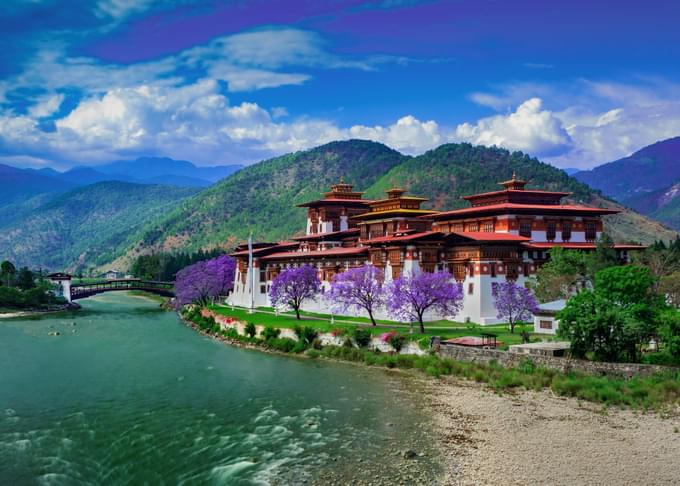
- Upon reaching Punakha, visit the magnificent Punakha Dzong, perched at the confluence of the Pho Chhu and Mo Chhu rivers.
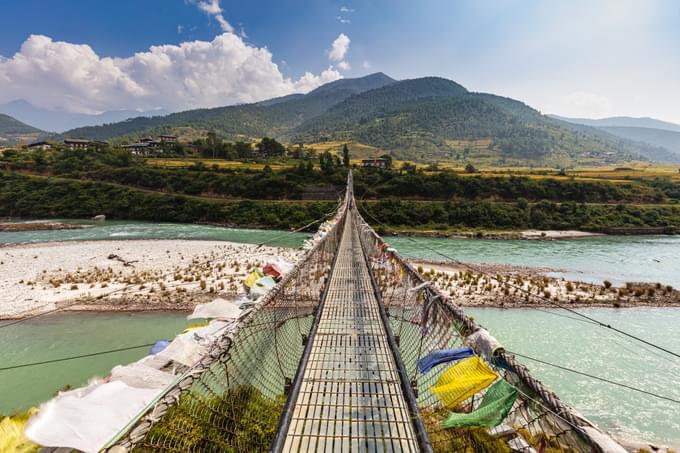
- Walk across the Punakha Suspension Bridge and take in the stunning views of the valley and the rivers below.
- Visit Chimi Lhakhang, popularly known as the Temple of Fertility, and learn about its significance in Bhutanese culture.
- Check in to your hotel and spend the evening at leisure along the riverside.
Day 5: Punakha to Paro
- Check out in the morning and drive from Punakha to Paro, a scenic journey of around 3 to 4 hours.
- En route, stop at Simtokha Dzong, one of the oldest fortresses in Bhutan, and take in its impressive architecture.
- Upon arrival in Paro, check in to your hotel and take some time to relax and freshen up.
- Spend the afternoon at leisure, visiting Zuri Dzong Fort for mesmerising views of Paro Valley and the Paro Dzong.
- Visit Tamchoe Monastery, renowned for its beautiful architecture and traditional artwork.
- In the evening, head to the serene Paro Chu River and enjoy the stunning sunset views before returning to the hotel for an overnight stay.
Day 6: Hike to Tiger's Nest Monastery | Paro Sightseeing
- Board your transfer in the morning to Ta Dzong, a historic watchtower turned museum, and explore its collection of Bhutanese artefacts and relics.
- Visit Rinpung Dzong, a grand 17th-century fortress-monastery renowned for its intricate wall paintings and impressive Bhutanese architecture.
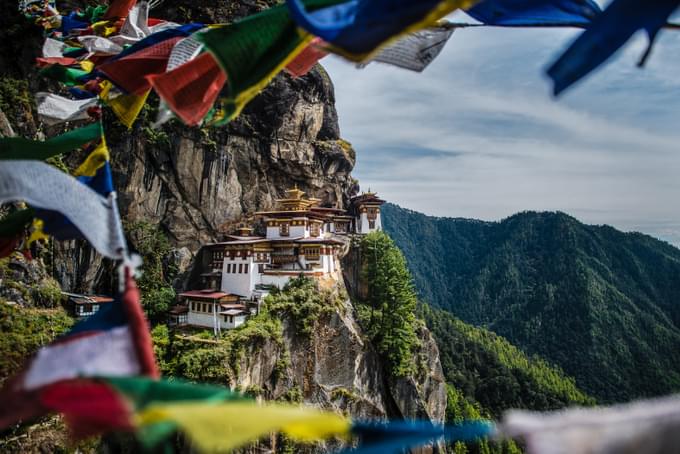
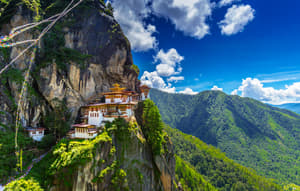
- Get transferred to the Tiger's Nest Monastery parking lot and begin the iconic hike to Paro Taktsang, perched into a cliffside at 3,120 metres.
- Trek through lush pine forests with colourful prayer flags fluttering along the trail, creating a truly magical atmosphere.
- Upon reaching the monastery, admire its breathtaking cliffside architecture and soak in the panoramic views of Paro Valley stretching out below.
- The full hike takes around 4 to 6 hours at a comfortable pace, making it manageable for most fitness levels with the right pacing.
- Get driven back to the hotel after the trek for a well-deserved rest and an overnight stay.
Day 7: Transfer to Phuentsholing | Departure
- Check out of the hotel in the morning and board your transfer back to Phuentsholing.
- En route, stop at the immigration office to complete the final border formalities before crossing into India.
- Upon reaching Phuentsholing, board your onward transfer to New Jalpaiguri Railway Station or Bagdogra International Airport.
- This marks the end of your memorable Bhutan journey, filled with stunning landscapes, rich culture, and unforgettable experiences. Thrillophilia's approach to itinerary planning is what sets the experience apart, as verified traveller Sangeeta Pillai, who booked the Escape to Bhutan | From Sacred Trails to Highland Tales package, summed it up well, saying: "The itinerary was well-paced, covering Phuentsholing, Thimphu, Punakha, and Paro without feeling rushed. Each destination had its own charm, and we had enough time to actually soak in the places rather than just ticking them off."
Planning Your Bhutan Trip from India: What You Need to Know
Thrillophilia's on-ground experts and data team inform you about the additional costs and tips you need to know before you start with your Bhutan tour package. This information helps you plan your expenses better and prepares you for a smoother experience. Here are a few things you need to keep in mind:
1) SDF (Sustainable Development Fee)
An amount of INR 1,200 per person per night is applicable as SDF (Sustainable Development Fee) for Indian travellers in Bhutan. Children below five years aren't required to pay the SDF, but those above five till 12 years of age have to pay INR 600 per night. However, those who are above 12 have to pay full charges.
2) Entry Permits
Indian citizens do not need a visa but must obtain a free Entry Permit to enter Bhutan and travel within Paro and Thimphu. You need an original passport, which is valid for six months, or a voter ID, passport photos, as Aadhaar cards are not accepted. These permits are issued at Paro Airport on arrival or at Phuentsholing immigration office when entering Bhutan through the Jaigaon land border.
3) Connectivity
Local SIM cards like TashiCell and B-Mobile(Bhutan Telecom's service) are available at Paro Airport or town outlets with ID and entry permit documents. 4G works in Paro, Thimphu, and Punakha, but the network becomes weak or unavailable in remote areas and mountain routes.
4) Currency
Indian Rupees are accepted at a 1:1 value with BTN, but only INR 100, INR 200, and INR 500 notes are commonly used. INR 2000 notes are not accepted, and ATMs are limited to major towns like Paro, Thimphu, and Punakha. Carry enough cash before entering Bhutan, as card payments are limited and rural areas may not have ATMs.
5) Travel Permit
To visit places like Punakha, Gangtey, or Haa Valley, you must apply for a Special Route Permit or Inner Line Permit in Thimphu. It is issued during working hours at the Immigration Office and must be obtained before entering any of the places that require a permit.
6) Best Entry Points from India
Phuentsholing via Jaigaon in West Bengal is the main road entry point, which is ideal for reaching the Paro and Thimphu regions. You can fly to Bagdogra and drive four to five hours via NH-17 or NH-317 to reach Bhutan. Also, you can take Drukair and Bhutan Airlines flights to Paro from Delhi, Kolkata, Guwahati, and Bagdogra.
Famous Events & Festivals in Bhutan
Festivals and events in Bhutan are happy expressions of the old Buddhist culture, which are held in honour of a saint named Guru Rinpoche. If you have a Bhutan trip in mind, these are some of the major events you can attend.
1. Paro Tsechu (29th March to 2nd April, 2027)
Paro Tsechu is one of the most popular religious festivals of Bhutan, celebrated for 5 days at a stretch at the Rinpung Dzong. This festival pays tribute to Guru Rinpoche through masked dances called cham. Laymen and monks perform Shacham (stag dance) and Guru Tshengye (Guru Rinpoche’s eight manifestations) to depict stories of the victory of good over evil. The festival ends with the unfurling of the massive Thongdrel, a silk appliqué flag, on the final day.
2. Haa Summer Festival (19th to 21st September, 2026)
The Haa Summer Festival is a unique cultural festival of Bhutan, celebrated for 2 days every year in September in the Haa Valley. This festival highlights the traditional lifestyle of nomadic yak herders and local villagers. During the festival, many traditional games are played, such as archery, khuru (dart throwing), soksum (a local team game), and pillow fights. You can also see demonstrations of yak herding, traditional tents, and village life.
3. Thimphu Tsechu (21st to 23rd September, 2026)
The Thimphu Tshechu is one of the largest religious festivals of Bhutan, celebrated for 3 days at the courtyard of Thimphu's Tashichho Dzong. This festival honours Guru Rinpoche, who brought Buddhism to Bhutan. Monks and laymen perform sacred masked dances such as Zhana Cham (Black Hat dance) and Durdag Cham (Dance of the Cremation Ground Lords). Locals wear their finest traditional clothes, such as the gho and kira, and gather to celebrate their culture. On the final day, you can watch the giant Thungdrol unfurl, believed to bring blessings and cleanse sins.
4. Jomohari Mountain Festival (14th to 15th October,2026)
The Jomolhari Mountain Festival is a 2-day festival of Bhutan, held every October near Mount Jomolhari in the Soe region of Thimphu. It celebrates mountain life and promotes conservation of the snow leopard. Locals perform folk dances and play games like yak riding, archery, and khuru. You can spot souvenir and food stalls selling butter, dried yak cheese, and ema datschi.
5. Jambay Lakhang Drup (5th to 8th November,2026)
The Jambay Lhakhang Drup is a 5-day religious festival, held in autumn at Jambay Lhakhang in Bumthang Valley. It honours Guru Rinpoche through masked dances. You can witness the Mewang (fire blessing) and Tercham (midnight sacred dance), which are believed to purify sins, remove evil, and bring fertility.
6. Black-Necked Crane Festival (11th November, 2026)
The Black-Necked Crane Festival is a 1-day festival in Bhutan, held on November 11 at the courtyard of Gangtey Monastery in Phobjikha Valley. It celebrates the return of the black-necked crane from Tibet. You can see locals perform mask dances, crane dances, and songs. The festival promotes conservation through crafts, local food, and bird-watching activities.
7. Druk Wangyel Tshechu (13th December,2026)
The Druk Wangyel Tshechu is a unique 1-day festival of Bhutan, held on December 13 at Dochula Pass near the 108 chortens. It honours Jigme Singye Wangchuck and the Royal Bhutan Army for their 2003 victory. You can witness soldiers perform masked and folk dances to celebrate peace, protection, and the unity of Bhutan.
Best Time to Visit Bhutan
The best time to visit Bhutan is during spring (March to May) and autumn (September to November), when the weather is pleasant, skies are clear, and the Himalayan landscapes are at their most beautiful. These months are ideal for sightseeing, trekking, photography, and attending Bhutan's vibrant cultural festivals. Temperatures generally range between 10°C and 25°C in valleys such as Paro, Thimphu, and Punakha, making outdoor exploration comfortable.
Bhutan in Spring (March to May)
Spring is one of the most popular seasons for Bhutan tour packages. The valleys come alive with blooming rhododendrons, magnolias, and jacaranda flowers, creating colourful landscapes across the country. The season is also known for major festivals such as the Paro Tshechu, which attracts visitors from around the world.
Bhutan in Summer (June to August)
Summer brings occasional monsoon showers, especially in southern Bhutan. However, the countryside turns lush green, and tourist crowds are relatively lower. This season is suitable for travellers seeking quieter experiences and discounted hotel rates.
Bhutan in Autumn (September to November)
Autumn is considered the peak tourist season in Bhutan. Clear mountain views, pleasant temperatures, and excellent trekking conditions make it perfect for outdoor adventures. Popular festivals such as Thimphu Tshechu and Black-Necked Crane Festival also take place during this period.
Bhutan in Winter (December to February)
Winter offers crisp weather, fewer tourists, and excellent views of snow-capped Himalayan peaks. Temperatures can drop below freezing in higher-altitude regions, while destinations like Punakha remain relatively mild. It is an ideal season for birdwatching and experiencing Bhutan's peaceful atmosphere.
How to Reach Bhutan
Mode | Route | Duration | Cost (INR) |
By Air | Delhi to Paro | 2.5 to 3 hrs approx | INR 18,000 to 40,000 |
By Air | Kolkata to Paro | 1 hr 15 mins approx | INR 10,000 to 25,000 |
By Air | Mumbai to Paro (via Delhi/Kolkata) | 5 to 8 hrs | INR 20,000 to 45,000 |
By Air | Bengaluru to Paro (via Delhi/Kolkata) | 5 to 8 hrs | INR 20,000 to 45,000 |
By Road | Jaigaon (India) to Phuentsholing (Bhutan) | 30 mins approx | Minimal border crossing cost |
By Train | New Jalpaiguri (NJP) to Hasimara | 2 to 3 hrs approx | INR 100 to 800 |
By Train | Kolkata to Hasimara | 12 to 15 hrs approx | INR 400 to 2,500 |
- Drukair, the national airline of Bhutan, operates direct flights to Paro from Delhi, Kolkata, Mumbai (seasonal), Guwahati, and Bagdogra. It is the preferred carrier for travellers seeking convenient schedules and direct access to Bhutan's only international airport.
- Bhutan Airlines offers direct flights between Paro and major Indian cities, including Delhi and Kolkata. The airline is often preferred by travellers looking for additional flight options during peak Bhutan travel seasons from March to May and September to November.
- Kolkata is the most popular departure city for Bhutan-bound travellers due to its short flight duration of approximately 1 hour 15 minutes to Paro and relatively affordable airfares available throughout the year.
- Travellers from Mumbai, Bengaluru, Chennai, Hyderabad, and Pune usually connect through Delhi or Kolkata before boarding flights to Paro, with total travel times ranging from 5 to 8 hours depending on layover duration.
- Budget-conscious travellers can enter Bhutan by road through the Phuentsholing border. The nearest railway stations are Hasimara and New Jalpaiguri in West Bengal, from where taxis and shared vehicles are readily available to reach the Bhutan border.
- Indian citizens can enter Bhutan without a visa using a valid Passport or Voter ID card. Entry permits are issued upon arrival at Paro International Airport or at the Phuentsholing Immigration Office for travellers entering by road.
- Paro International Airport is Bhutan's only international airport and serves as the main gateway to popular destinations such as Thimphu, Paro, Punakha, Wangdue Phodrang, and Bumthang included in most Bhutan tour packages.
Best Places to Visit in Bhutan
1. Paro
Paro is at an elevation of around 2,200 metres and is the main entry point to the country, as it is home to the only international airport. Hike to the cliffside Tiger’s Nest Monastery and explore Rinpung Dzong, a Bhutanese architectural masterpiece. Visit the National Museum of Bhutan to see ancient artefacts and the oldest temple, Kyichu Lhakhang. You can also take a drive to Chele La Pass, at an altitude of 3,988 metres, to witness Jichu Drake and Mount. Jomolhari.
2. Punakha
Punakha is a valley in Bhutan, situated at the meeting point of the Pho Chhu (father) and Mo Chhu (mother) rivers. It is known as Bhutan’s former capital and is famous for the grand Punakha Dzong, which is especially photogenic around sunset, when its whitewashed walls reflect beautifully in the Pho Chhu River. Here, the temple of Chimi Lhakhang and a walk across the Punakha Suspension Bridge for river views can be explored. Also, hike to Khamsum Yulley Namgyal Chorten for a clear view of the Punakha valley.
3. Bumthang
Bumthang is a group of four valleys, namely Choekhor, Ura, Chumey, and Tang. It is located in central Bhutan, a high-altitude region known for its farms, apple orchards, and quiet villages. Visit Jambay Lhakhang, Kurjey Lhakhang, and important religious sites associated with Guru Rinpoche. Other than these, visit Jakar Dzong for valley views and see the sacred river site of Mebar Tsho as part of your Bhutan tour.
4. Haa Valley
Haa Valley is a quiet valley known as the “Hidden-Land of Rice,” which is located in western Bhutan, at an altitude of 2,670 metres. It is known for its alpine forests, the Haa Chu River, and the Katsho Goemba monastery in Katsho village. During your trip, explore the White Temple of Lhakhang Karpo and the Black Temple of Lhakhang Nagpo. Visit ancient monasteries of Jamtoe and Yangto while exploring the Chele La Pass for views of Mt. Jomolhari.
5. Gelephu
Gelephu is a growing town near the Indian border and an important entry point in southern Bhutan. The town is also being developed into Gelephu Mindfulness City, a large project planned as a carbon-negative, smart city focused on green living. You can relax at the Gelephu Tsachu hot springs, hike to the Dolpani waterfall, and explore Royal Manas National Park. Also, you can taste local Khengpa food made with wild mushrooms and banana flowers.
6. Eastern Bhutan
Eastern Bhutan, which is called the “Jewel of the East”, is a remote region with deep valleys, mountains, and traditional village life. When here, visit Trashigang for the Trashigang Dzong, explore Lhuntse for Takila and its large Guru Rinpoche statue, and see Trashiyangtse for Chorten Kora. As part of the Bhutan packages, you can also visit Mongar, with its landscapes, as well as Merak and Sakteng to experience the nomadic Brokpa culture.
All About Bhutan Permit Requirements for Indian Travellers
1. Documents Required
- Valid Indian Passport (6 months validity) or Voter ID
- Passport-size photos
- Hotel booking
- Travel itinerary
- A birth certificate or school ID is required for children below 18 years of age.
2. How to Obtain Your Entry Permit (Airport vs Road Entry)
The Entry Permit is issued at the immigration office in Phuentsholing for road travel. If you are travelling by air, you can get one at the Paro International Airport upon arrival.
3. Route Permit for Beyond Paro and Thimphu
- The Entry Permit allows you to travel only within Thimphu and Paro.
- For places like Punakha or Phobjikha Valley, you must apply for a Route Permit in Thimphu.
- These permits are granted for 7 to 15 days and can be extended if the need arises.
4. SDF and Other Entry Requirements
- SDF of INR 1,200 per adult per night is mandatory.
- Children aged 6 to 12 years must pay 50%, and those under 5 years are free.
- Apply online on the official website of Department of Immigration, Ministry of Home Affairs or get the permit at the entry point.
- Entry is allowed via Phuentsholing, Gelephu, Samdrup Jongkhar, or Paro Airport.
- If carrying Indian currency above INR 25,000, it can be in INR 100, INR 200, or INR 500 denominations.
Must-have Experiences on Your Bhutan Trip
1. Enjoy River Rafting in Punakha’s Mo Chhu River
Rafting on the Mo Chhu River in Punakha is a 10 km ride across gentle Class II–III rapids. This activity takes about 1 to 1.5 hours and requires you to wear a helmet and a life jacket. You get to sit in an inflatable raft with a guide, and paddle through mild currents, passing fields and ending near Punakha Dzong.
- Price: INR 1500 to INR 2500 approx
2. Visit the Monasteries for Spiritual Enlightenment
One of the prime things you can do with Bhutan tour packages is visit monasteries to witness monks praying, studying, and living. Explore key religious sites such as the Punakha Dzong, Gangtey Monastery, Kurjey Lakhang, and Paro Taktsang. You can also head to the Great Buddha Dordenma to admire the 51-metre-high statue, surrounded by 1,25,000 miniatures of the same. However, if you are visiting the monasteries, it is recommended that you plan your trip during the Tsechu festivals to witness the masked dances.
- Price: Entry fee is around INR 500 to INR 1,000, approx
3. Explore the Historic Trade Route
Exploring the trade route trek between Paro and Thimphu lets you pass through a trail that passes through Jele Dzong and Damchena village. During the walk, you get to explore Jangchulakha, Simkota, and Phajoding Monastery. Walk across mountain passes, yak pastures, rhododendron forests, and alpine ridges. Along the route, you can see views of Mount Jomolhari, Jitchu Drake, and Gangkar Punsum, while guides explain how traders once used this path.
4. Relish the Unique Cuisine of Bhutan
You can try the unique dishes of Bhutan, known for simple ingredients and strong chilli flavours. Taste the most famous dish, Ema Datshi, made with cheese and chillies. You can also try dumplings like Momos, dishes like Jasha Maru (spicy chicken), Hoentay, and Goep. Opt for meals that include buckwheat noodles with Shamu Datshi, a warm stew of cheese and mushrooms. As per the locals, the traditional Ara drink, made from barley or rice, pairs well with these meals.
5. Wander Through the Bumthang Valley
You can enjoy a walk through Bumthang Valley, known for its peaceful villages and old monasteries. Visit Kurjey Lhakhang, Jambay Lhakhang, Tamshing Lhakhang, and Jakar Dzong to see temples and murals. Explore the Ogyen Choling Palace Museum, try local cheese at the Swiss Farm, and taste beer at the Red Panda Brewery. Also enjoy walks along the Chamkar Chhu river, hot stone baths, and short trips to Ura and Tang valleys. However, to enjoy the sight of colourful rhododendrons, you can visit the valley in spring.
Top Bhutanese Restaurants
If you are planning a Bhutan trip from India and are confused about which restaurants to try to get the best of the Bhutan flavours, Thrillophilia's destination experts, with over a decade of experience and repeated visits to Bhutan, have filtered out some of the best restaurants worth adding to your itinerary.
1. Bukhari
A fine-dining restaurant set in a pavilion-style space, Bukhari is one of the most highly regarded dining experiences in Bhutan. The buckwheat pancakes and Yak Carpaccio are the standout dishes here.
Average spend: INR 4,000 to INR 5,000 per person.
2. Folk Heritage Museum Restaurant, Thimphu
To have the best Suja (butter tea), Jasha Maru, and Ema Datshi, visit this mid-range restaurant that serves organic Bhutanese food in a museum setting, making it a good choice for those who want to combine a cultural visit with a meal.
Average spend: INR 300 to INR 800 per person.
3. Chig Ja Gye, Thimphu
To try authentic Jasha Maru, Hoentay, and Ema Datshi, explore Chig Ja Gye, Thimphu, located within the Taj Tashi hotel, Chig Ja Gye is a fine-dining restaurant decorated with gold-leaf paintings and traditional Bhutanese motifs. Jasha Maru, Hoentay, and Ema Datshi are the recommended dishes.
Average spend: INR 3,500 and above per person.
4. Sonam Trophel, Paro
A reliable mid-range restaurant serving Bhutanese, Indian, and Chinese dishes in a warm, homely setting. Kewa Datshi, Chicken Pakora, and Thukpa are worth ordering.
Average spend: INR 250 and above per person.
5. Babesa Village Restaurant, Thimphu
Set in a traditional heritage home on the outskirts of Thimphu, the Babesa Village Restaurant offers a genuinely authentic dining experience. Suja, Jasha Maru, and Lom (dried turnip leaves) are the dishes to try.
Best Souvenirs to Bring Home From Bhutan
1. Cane & Bamboo Products
Bhutan is known for quality cane and bamboo products made by local artisans. You can shop for bamboo baskets called pangchu, woven hats called belo, wine caskets called palang, and food baskets called Tsezem.
- Price: INR 300 onwards, depending on the item and size
- Where to Shop: Handicrafts Association of Bhutan, Paro Craft Market, and Craft Bazaar
2. Colourful Masks:
Bhutanese masks are handcrafted from softwood, painted in vivid colours, and adorned with beads. Collect them as souvenirs in the forms of snow lions, furious deities, and tigers, each one distinct and locally made.
- Price: INR 1,000 onwards
- Where to Shop: Norzin Lam Craft Stalls and Sephub Gyeltsen Tsongkhang, Thimphu.
3. Hand-Woven Textiles:
Bhutan is one of the best places to buy hand-woven cotton and silk textiles. Shop for women's dresses called Kira, men's attire called Gho, or pick up wall hangings, scarves, and bags as unique keepsakes.
- Price: INR 500 onwards
- Where to Shop: National Textile Museum, Thimphu, and Lhuentse weaving village.
4. Bhutan Red Rice:
Bhutan Red Rice is a nutritious, nutty-flavoured grain grown in the Paro Valley and is one of the few places in the world where it is cultivated organically. It makes for a practical and authentic edible souvenir to carry home.
- Price: INR 200 - INR 600 per kg, depending on packaging and quantity.
- Where to Shop: Centenary Farmers Market, Thimphu and Paro weekend market.
5. Bhutan Handicrafts
The handicrafts of Bhutan reflect the culture and craftsmanship through items like wooden bowls called dappa and handwoven baskets. On a Bhutan trip, you can shop for souvenirs such as Yathra textiles, clay statues of Bhutanese deities and thangka paintings.
- Price: INR 100 onwards
- Where to Shop: Bhutanese Crafts Bazaar (Thimphu), National Handicrafts Museum (Thimphu).
Adventure Activities in Bhutan
1. Wildlife Safari
A safari in Royal Manas National Park takes you through jungle trails and river corridors where tigers, elephants, and rhinos roam freely. Jigme Dorji National Park is ideal for spotting snow leopards and blue sheep, while Phobjikha Valley draws winter visitors for black-necked crane sightings. Thrillophilia's travel coordinators suggest and ensure that all safari bookings are through verified local operators, with entry permits and guide arrangements handled before arrival.
Price: Around INR 26,000 per person.
2. Paragliding
Fly as a tandem passenger with a certified pilot over Bumthang, Phobjikha, and Paro valleys, with views of monasteries, rivers, and forested ridgelines from above. No prior experience is needed. The best time is March to May for clear skies and stable winds. Thrillophilia works only with certified pilots and verifies wind conditions as part of its activity safety process.
Price: INR 7,000 to INR 10,000 for a 25-minute flight and INR 11,000 to INR 15,000 for a 50-minute flight.
3. Rock Climbing
The Nose, a granite cliff above Thimphu, has 13 marked routes from 12 to 27 metres, graded for beginners to experienced climbers. All participants climb with ropes and proper safety gear, and the top offers open views across the Thimphu Valley and surrounding hills. Thrillophilia includes this as an add-on for travellers combining cultural stops with outdoor adventure in Thimphu.
Price: INR 1,500 per person.
4. Whitewater Rafting
Rafting on the Mo Chhu and Pho Chhu rivers in Punakha is one of the most popular adventure add-ons across Thrillophilia's Bhutan packages. Mo Chhu offers a 10 km Class II ride for beginners, while Pho Chhu has Class II to IV rapids over 16 km for seasoned rafters. Both routes pass through villages and over suspension bridges, offering views of Punakha Dzong along the way. Thrillophilia coordinates rafting slots with safety-certified operators based on each group's skill level.
Price: INR 3,500 to INR 10,000 per person.
5. Tiger's Nest Trek
The hike to Tiger's Nest Monastery in Paro is one of the most rewarding experiences on any Bhutan trip. The trail climbs through steep forest paths and mountain terrain before reaching the monastery built into a cliffside at 3,120 metres. The full trek takes around 4 to 6 hours and is manageable for most fitness levels with the right pacing. Thrillophilia includes the Tiger's Nest trek as a guided activity across its Bhutan packages, with experienced local guides who set a comfortable pace for the group. One of our verified trav, eller Deepak Menon, who booked the Best of Bhutan FREE Visit to Taktsang Monastery package, specifically mentioned this saying “The trail up to the Tiger's Nest is challenging but the monastery perched on that cliff is otherworldly. Beyond the monastery, the dzongs, the prayer flags, the valleys and the pace of life here are all deeply calming. Our guide Dorji was incredibly warm, well-read and made every site feel personal and meaningful.”
Price: Included in select Thrillophilia Bhutan packages.
Read the complete story to know about the experience of Disha Karia, a traveller from Mumbai, who trekked to Tiger's Nest during her first solo trip to Bhutan with Thrillophilia.
Bhutan vs Sikkim: Which Should You Choose?
Both Bhutan and Sikkim sit in the eastern Himalayas and draw travellers looking for mountain scenery, Buddhist culture, and a slower pace of travel. However, the two destinations are quite different in terms of access, cost, and overall experience.
Bhutan requires an Entry Permit and a mandatory Sustainable Development Fee of INR 1,200 per night, making it a more regulated and slightly higher-budget destination. Sikkim, being an Indian state, requires no international documentation and is significantly easier and cheaper to access for Indian travellers. A 7-day Bhutan trip typically starts at INR 39,890 per person excluding flights, while a comparable Sikkim trip can be done for INR 18,000 to INR 25,000 per person.
In terms of experience, Bhutan offers something that Sikkim simply cannot replicate. Tourism in Bhutan is deliberately controlled and low-impact, which means fewer crowds, better-preserved monasteries, and a cultural immersion that feels genuinely untouched. Tiger's Nest Monastery, Punakha Dzong, and the masked festival dances are experiences with no equivalent in Sikkim. Sikkim, on the other hand, offers easier access to high-altitude lakes like Gurudongmar and Tsomgo, more affordable adventure activities, and the flexibility of independent travel without a mandatory guide.
For first-time Himalayan travellers on a tighter budget, Sikkim is the more practical choice. For travellers who want a deeper, more culturally immersive experience and are willing to invest a little more, Bhutan is worth every rupee.
Travel Tips for Bhutan Tour
- Strap on Comfortable Shoes: The terrain of Bhutan can be uneven and steep. So, if you plan to go hiking, you must strap on durable and comfortable shoes with good grip.
- Make Bookings: Bhutan's peak season is spring, when the weather is pleasant and major festivals are held. It is recommended to reserve tours, hotels, and flights to avoid any hassles.
- Stay protected from the Sun: The sun is stronger at higher altitudes. Carry a hat, sunscreen, and sunglasses to protect yourself from harsh sunlight.
- Stay Hydrated: Dehydration is a serious concern at higher elevations. Drink lots of water and carry a refillable bottle.
- Check Your Permits and Documents: To enter Bhutan, you must carry essential documents, such as a Voter ID and a valid passport. Obtain permits for longer or shorter trips via licensed tour operators.
- Download Local Apps for Payments: If you are short on cash, try using the local app DrukPay for secure digital banking. You can activate it once, use MPIN/ TPIN, and manage payments easily.
- Allow time for Acclimatisation: The altitude of Bhutan can be challenging. It is recommended that you relax on the first day and avoid any strenuous physical activity.
- Ensure connectivity at All Times: Get a local SIM from TashiCell or Bhutan Telecom on arrival. If you are to explore rural areas, use B-Mobile (Bhutan Telecom's service), download the offline maps, and activate data.
Why Choose Thrillophilia for Your Bhutan Tour Package?
Based on booking data from over 2,257 travellers who visited Bhutan with Thrillophilia between January and May 2026, the most frequently booked itinerary is the 7-day route covering Phuentsholing, Thimphu, Punakha, and Paro, with the Tiger's Nest trek rated as the single most memorable experience across all reviews. With over a decade of experience and more than 3 million travellers served across India, Thrillophilia brings operational depth to Bhutan travel that goes well beyond standard package bookings.
Every Bhutan tour package includes Entry Permits, the Sustainable Development Fee, Route Permits for destinations like Punakha and Gangtey, and complete documentation support with no hidden charges. Packages are available across budget, mid-range, and luxury tiers starting at INR 28,500, making it straightforward for solo travellers, couples, families, and groups to find a plan that fits their needs. Verified accommodation, internal transfers, a certified local guide, and 24/7 on-trip assistance are included across all tiers.
Itineraries span major destinations including Thimphu, Paro, Punakha, Bumthang, and Haa Valley, with combo options extending into Nepal and Sikkim for travellers planning a longer journey. Festival-based tours are also available around Paro Tsechu and Thimphu Tsechu for those who want to go beyond sightseeing into genuine cultural participation. The ground team has specific experience managing travel for senior travellers, solo women, and first-time international tourists, with a 4.6 rating across 9,735 Bhutan reviews from customers in over 70 countries.
Bhutan Packages | Duration | Price |
|---|---|---|
| Glimpse of Bhutan | From Sacred Sites to Scenic Wonders | 7 days & 6 nights | INR 45,950 |
| Wonders of Bhutan | FREE Excursion to Paro | 6 days & 5 nights | INR 42,990 |
| Experiential Bhutan | Free Gangtey Gompa Monastery Excursion | 8 days & 7 nights | INR 48,299 |
| Bhutan & Nepal Vacation | COMBO DEAL | 8 days & 7 nights | INR 1,65,000 |
| Explore Bhutan with FREE Taktsang Monastery Tour | 8 days & 7 nights | INR 52,990 |
| Holidays in Bhutan | FREE Dochu La Pass Excursion | 7 days & 6 nights | INR 49,350 |
| Gems of Bhutan | Thimphu Punakha & Paro | 6 days & 5 nights | INR 39,290 |
| Escape to Bhutan | From Sacred Trails to Highland Tales | 6 days & 5 nights | INR 38,586 |
| Instagrammable Bhutan | Couple Special | 7 days & 6 nights | INR 79,999 |
| Bhutan Bike Expedition | Ride the Land of the Thunder Dragon | 7 days & 6 nights | INR 66,990 |
| Bhutan Sikkim and Darjeeling Tour Package | 11 days & 10 nights | INR 61,000 |
| Getaway to Bhutan | FREE Hike to Taktsang Monastery | 6 days & 5 nights | INR 28,500 |
Bhutan Tour faqs
How many days are enough for a Bhutan trip?
A 5 to 7 day trip is ideal for covering the essentials of Bhutan, including Thimphu, Paro, Punakha, and the iconic Tiger's Nest hike. For a more relaxed pace with additional stops like Bumthang and central Bhutan valleys, extending the trip to 7-9 days is recommended. Each destination has its own unique charm, from the fortress-like dzongs of Punakha to the serene monasteries of Paro. Travellers with more time can explore offbeat regions like Haa Valley or Phobjikha for a deeper and more immersive Bhutan experience.
Do Indians need a tour guide in Bhutan?
Yes, Indian travellers are required to hire a licensed local guide when visiting Bhutan, as part of the country's responsible tourism policy aimed at preserving its culture and environment. A government-approved guide is mandatory for obtaining route permits, accessing monasteries and dzongs, and travelling beyond the main cities of Thimphu and Paro. All Thrillophilia Bhutan packages include an experienced, certified local guide who handles all documentation and permits, while also adding rich cultural depth to your trip by sharing insights into Bhutan's history, traditions, and way of life, making every visit far more meaningful and immersive.
How much does a Bhutan trip cost from India?
A Bhutan trip from India typically costs between INR 25,000 and INR 65,000 per person for a 5-7 day trip, covering accommodation, meals, transport, and a licensed guide. The Sustainable Development Fee of INR 1,200 per night is charged additionally on top of the package cost. The final price depends on the type of accommodation chosen, the route covered, and the duration of the stay. Booking a complete package through a reliable operator like Thrillophilia ensures transparent pricing and a well-organised itinerary.
What is the best time to visit Bhutan?
March to May and September to November are widely considered the best months to visit Bhutan, offering pleasant weather and clear skies. Spring brings vibrant rhododendron blooms across the valleys, while autumn offers spectacular mountain views and some of Bhutan's most colourful festivals. Both seasons are ideal for the Tiger's Nest hike and other outdoor activities across the country. Winters can be cold but offer fewer crowds and lower prices, while summers bring monsoon rains that can make roads slippery in some areas
Can I get a visa on arrival in Bhutan?
Indians do not require a visa at all and simply receive a free entry permit on arrival at Paro Airport or the Phuentsholing border. The process is quick and straightforward, requiring only a valid passport or voter ID for verification. Non-Indian nationals, however, must apply for a visa in advance through a licensed Bhutanese tour operator before their trip. This makes the entry process significantly simpler for Indian travellers compared to other foreign nationals.
Which currency is used in Bhutan?
Bhutan's official currency is the Ngultrum (BTN), which is pegged at a 1:1 ratio with the Indian Rupee, making it very convenient for Indian travellers. Indian currency is widely accepted across most of Bhutan, including shops, restaurants, and hotels. However, INR 2,000 notes are generally not accepted, so it is advisable to carry smaller denominations like INR 100, INR 200, and INR 500 notes. Having some local Ngultrum on hand is useful for smaller purchases in rural or remote areas.
What should I pack for a Bhutan trip?
Regardless of the season, warm layers are essential for a Bhutan trip as evenings can get quite cold across all regions of the country. Comfortable and sturdy trekking shoes are a must, especially if you plan to do the Tiger's Nest hike or any other trail. Sunscreen, a light rain jacket, and a reusable water bottle are also important additions to your packing list. Carry cash in smaller denominations like INR 100, INR 200, and INR 500 notes, as ATMs can be unreliable in smaller towns and many local shops do not accept cards.
Can I use an Indian SIM card in Bhutan?
Most Indian SIM cards require international roaming activation and may not work reliably, so it is important to arrange for local connectivity before or upon arrival. Local SIM cards from B-Mobile (Bhutan Telecom's service) or TashiCell are available at Paro Airport and in Thimphu for around INR 300-INR 500 and offer reliable coverage across major towns. These SIM cards are easy to activate and provide affordable data and calling options for the duration of your stay. It is advisable to download offline maps and key information before your trip as network coverage can be limited in remote areas.
Is Bhutan visa-free for Indians?
Yes, Indian nationals do not need a visa to enter Bhutan, making it one of the most hassle-free international destinations for Indian travellers. Unlike many international destinations, Bhutan does not require Indian travellers to go through lengthy visa applications, embassy appointments, or extensive paperwork.
You simply receive a free entry permit on arrival at Paro Airport or the Phuentsholing border crossing. A valid passport or voter ID card is all you need to carry as identification. No advance visa processing or additional documentation is required.
What is the Sustainable Development Fee (SDF) for Indians visiting Bhutan?
Indians visiting Bhutan are required to pay a Sustainable Development Fee of INR 1,200 per night, which is charged separately on top of accommodation and package costs. This fee is part of Bhutan's unique high-value, low-impact tourism policy aimed at preserving its culture and environment. The SDF goes directly toward Bhutan's conservation programmes, infrastructure development, and social welfare initiatives. It is a mandatory charge for all Indian visitors and should be factored into your overall trip budget.
How to plan a Bhutan trip from India?
Start by booking a Bhutan tour package that includes accommodation, internal transfers, a licensed guide, and all necessary permits for a hassle-free experience. Decide your preferred entry point, whether flying into Paro or crossing overland via Phuentsholing, based on your budget and convenience. Plan your trip around the best travel seasons, which are March to May for spring blooms and September to November for clear skies and mountain views. Booking through a reliable operator like Thrillophilia ensures a well-structured itinerary covering all major highlights within your chosen budget.
What documents are required for a Bhutan tour?
Indian travellers need a valid passport or voter ID card, passport-size photographs, and proof of travel bookings to enter Bhutan. Since no visa is required for Indians, the documentation process is relatively simple and straightforward. Non-Indian nationals additionally need a visa processed through a licensed Bhutanese tour operator before their arrival in the country. It is always advisable to carry photocopies of all important documents and keep digital backups accessible during your trip.